

Why the Philippines is Asia’s Answer to the Dominican Republic
When Major League Baseball thinks of international talent pipelines outside the U.S., the Dominican Republic immediately comes to mind—a nation where baseball isn’t just a sport, but a way out, a dream, and a national obsession.
But across the globe, there’s another island nation with the same raw material, the same hunger, and a baseball history that’s been overlooked for too long: the Philippines.
Sponsored Links
In 1954, the Filipinos achieved what many thought impossible: winning the inaugural Asian Baseball Championship, defeating powerhouses Japan, South Korea, and Taiwan. That victory wasn’t a fluke—it was a testament to a deep-rooted baseball culture and innate talent.
Yet, while Japanese and Korean players have since become MLB staples, the Filipino pipeline has remained untapped. The reason isn’t a lack of potential, but a lack of infrastructure, investment, and vision.
A Tale of Two Islands: Poverty, Passion, and Parallels
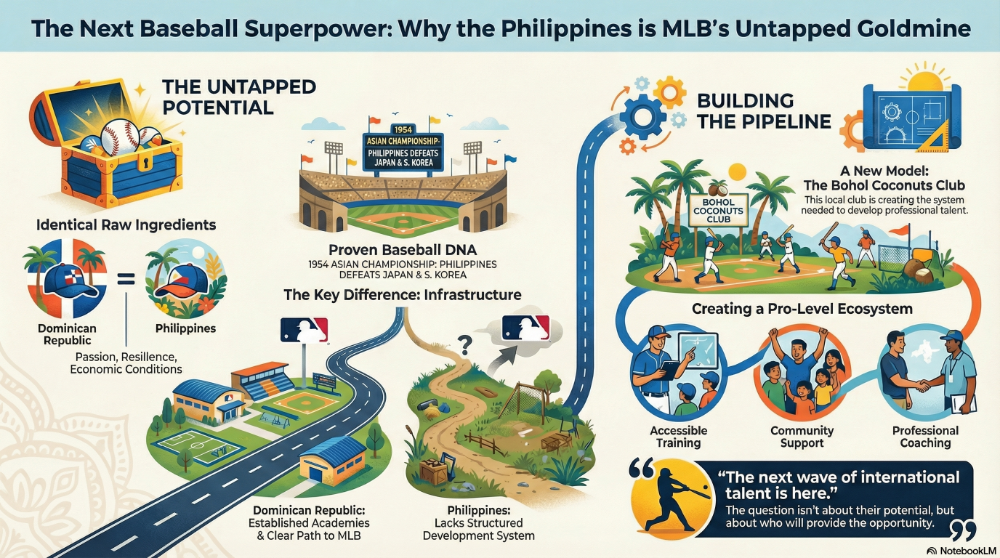
Look at the Dominican Republic. For decades, it has been MLB’s most fertile international recruiting ground. Why? Because in communities where opportunities are limited, baseball provides a tangible path to a better life.
Scouts have long recognized that hardship breeds resilience, discipline, and a ferocious will to succeed—traits that define great ballplayers.
Now look at the Philippines, specifically regions like Bohol. Here, as in the Dominican Republic, you find:
- Youth with immense athletic potential but limited organized sports outlets.
- A culture where family, community, and resilience are central to daily life.
- Economic conditions where sport can become a powerful motivator for change.
The primary difference? Investment. The Dominican Republic has a well-established system of academies, scouts, and a clear pathway to the majors. The Philippines does not. Imagine if the same resources, coaching, and belief were channeled into the Filipino youth. The results could be transformative.
The Proof Is in Our History, the Potential Is in Our Present
The Philippines’ 1954 championship proves that baseball excellence is in our DNA. Yet, without a professional league like Japan’s NPB to nurture homegrown talent, Filipino players have lacked the stage to develop into global superstars.
Japan produced Shohei Ohtani because its system identified and cultivated his once-in-a-generation talent from a young age.
The question isn’t whether the Philippines has players like Ohtani—it’s whether we have the system to find and train them.
Given the same structured training, high-level competition, and professional coaching that Dominican prospects receive, there is no doubt that Filipino-born superstars would emerge on the MLB stage.
The Bohol Coconuts Model: Building the Pipeline
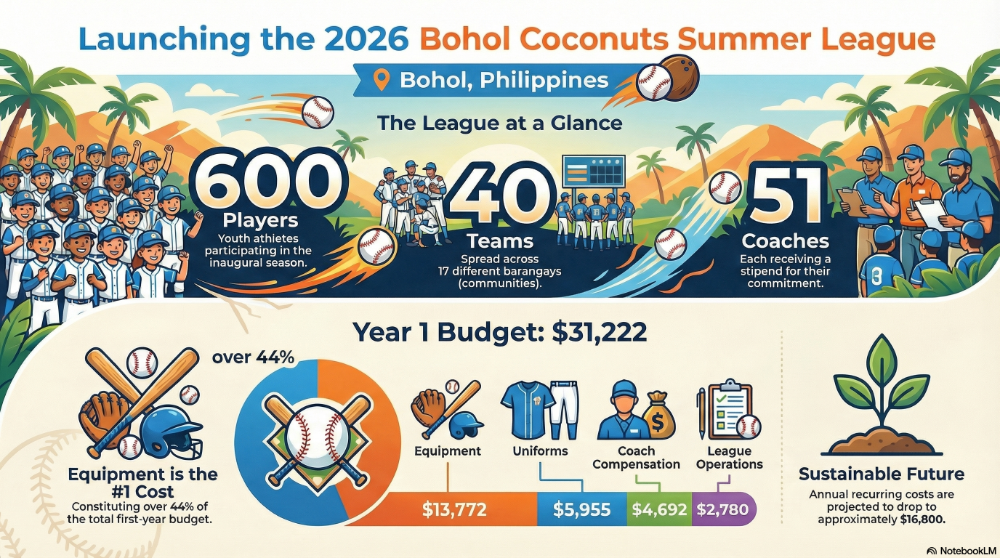
This is where the Bohol Coconuts Baseball & Softball Club comes in. We are building the very infrastructure that can unlock this potential. Our model addresses the core needs that allow talent to flourish:
Accessible Training: Offering affordable programs to ensure no child is left off the diamond due to cost.
Community Integration: Combining sports development with essential support like discounted meals, recognizing that talent can’t grow on an empty stomach.
Professional Coaching: Led by internationally experienced staff committed to teaching the game the right way.
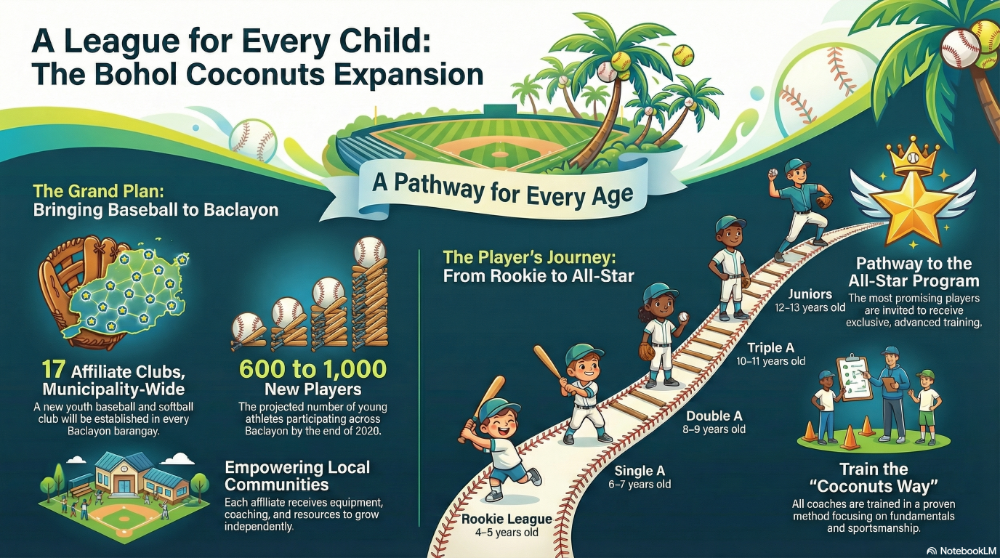
A Vision for Growth: Through franchise expansion and our Volunteer Abroad Program, we’re creating a sustainable baseball ecosystem that can identify and develop talent across the islands.
We are creating the conditions that have made the Dominican Republic a baseball factory: a safe place to play, quality instruction, and the hope of a future in the game.
A Call to MLB: Look to the Philippines
The next wave of international talent isn’t just in the Caribbean. It’s here in the Philippines, waiting for its chance. The raw ingredients—passion, history, athleticism, and need—are identical to those that fueled the Dominican boom.
Sponsored Links
The Bohol Coconuts are proving it’s possible on a local level. With greater investment, belief, and a structured pathway, the Philippines could become Asia’s premier source of baseball talent. The children that will soon be playing in the fields of Bohol could be the draft picks and All-Stars of tomorrow.
It’s not a question of if they have the potential. They’ve already proven they do. The question is, who will be the first to give them the opportunity?