

The Docuseries No One Saw Coming
The YouTube reality series debuting June 23 hasn’t aired a single episode yet — and it’s already one of the most compelling underdog stories in sports media. Here’s why it might do for Philippine baseball what Drive to Survive did for Formula 1.
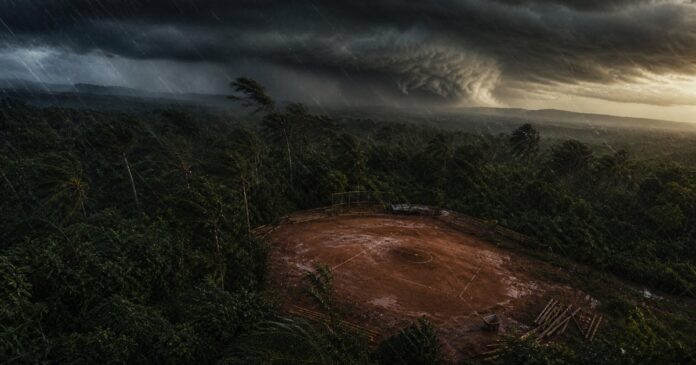
Before the cameras rolled, before the first episode title card faded in over swaying palms and red clay infield dirt, someone had to believe this was worth filming. Not a Netflix algorithm. Not a legacy sports network with a development budget and a room full of producers. Just a handful of people convinced that what was happening on a small island in the Visayas — something raw, unfinished, and stubbornly optimistic — deserved a witness.
That belief became Building the Coconuts.
The YouTube reality docuseries following the Bohol Coconuts Baseball & Softball Club is not, on paper, the kind of project that commands international attention. No superstars. No historic franchise. No multimillion-dollar broadcast deal. What it has instead is something harder to manufacture: a story genuinely in motion. A club being carved out of a Philippine jungle in real time — with the cameras running while the concrete is still being mixed and kids from families who cannot afford a new baseball glove are waiting for the gates to open.
“The talent is real. The opportunity hasn’t arrived. That is the baseline equation of sports in the developing world.”Coach Merv Moore — Moore or Less, April 2026
The underdogs in this story are not the club. They are the kids.
There is a version of the underdog sports story that gets told often and told comfortably — the scrappy franchise, the overlooked coach, the long-shot season. Drive to Survive built an entire global audience on that template. Building the Coconuts reaches for something rawer. The underdogs at the center of this docuseries are not the organization. They are children born into poverty on a provincial island who possess talent no one has yet had the infrastructure to find.
Coach Merv Moore has been writing about this equation for months in his column, and he does not dress it in sentiment. In the early morning haze of Bohol, he writes, before the humidity turns the air into a wet wool blanket, there is already a kid nearby. He is not in a jersey yet. He might be helping his family in the fields or walking to school in worn-out flip-flops. He might have a 90-mile-per-hour arm he does not even know about. The talent is real. The opportunity has not arrived.
“I don’t want to hear about the right last name. That is not how we are building this. Every kid who walks through that gate gets the same chance.”Coach Merv Moore — Bohol Coconuts Sports Director
That is not rhetorical positioning. The Bohol Coconuts are building a soup kitchen alongside the baseball diamond, because — as Coach Merv puts it with characteristic bluntness — you cannot hit a curveball on an empty stomach. They are funding academic contests and educational field trips. The pathway being constructed is not just athletic; it is a ladder out of a hole that has no bottom.
Lerma Moore, who serves as the club’s General Manager and is herself from the island, understands the weight of that mission from the inside. She grew up seeing what it means when there is no pathway — when talent evaporates not because it was insufficient, but because the system around it offered nothing to hold onto.
“I know these families. I know what it costs them to believe in something. We do not get to waste that belief. These kids are playing for more than themselves — they are playing for their parents, their brothers and sisters, everyone counting on them back home.”Lerma Moore — General Manager, Bohol Coconuts
That is the emotional center of Building the Coconuts as a media property — and it is the dimension no other sports docuseries currently on any platform is telling. Not the wealthy team clawing for a championship. Not the established sport searching for new demographics. A child from a low-income family on a remote Philippine island, chasing a dream big enough to change the trajectory of an entire household. That story does not need a three-act structure imposed on it. It already has one.
Drive to Survive changed the rules. Building the Coconuts goes further.
In 2019, Formula 1 was a sport bleeding casual fans. Commercially dominant, technically brilliant, and — for the uninitiated — impenetrable. Then Netflix released Drive to Survive, and within two seasons, F1 had cracked open an entirely new audience: Americans, younger fans, people who had never once watched a qualifying session but suddenly cared deeply about team dynamics, personality conflicts, and what it felt like to be on the grid at Monaco.
The lesson was not about racing. It was about access. The cameras did not invent drama — they found it, followed it, and trusted the audience to keep up. Suddenly, the athletes were not abstractions. They were people. But they were wealthy people, in wealthy teams, fighting over podiums and prize money. The stakes were competitive. In Bohol, the stakes are existential.
The Parallel
Building the Coconuts is operating from a different economic altitude than a Netflix production. But it shares the same emotional architecture: real stakes, real people, a story that has not been written yet. And in sports media, that unwritten quality is everything. The difference is that what is at stake in Bohol is not a trophy. It is a life.
A Japanese co-owner. A Filipino dream. A story the global sports market has not seen before.
Here is where Building the Coconuts has something Drive to Survive did not: a genuinely cross-cultural ownership story baked into the premise. Formula 1’s drama lived largely within a Western European and American media framework. The Coconuts are something different — a club rooted in a Philippine province, co-owned in part by a Japanese stakeholder, and aiming, explicitly and without irony, to develop the first native-born Filipino MLB superstar.
That sentence alone is a pitch meeting.
Japan’s relationship with baseball is one of the sport’s great underexplored media narratives — Shohei Ohtani’s rise notwithstanding. A Japanese co-owner investing in a Philippine youth baseball academy is a story with immediate resonance in East Asia. In the Philippines, a nation where basketball has long dominated the sports landscape, a club building genuine baseball infrastructure on Bohol Island is an act of quiet, radical optimism. In the United States, where MLB front offices are increasingly scouting internationally, the Philippines represents the road not yet taken.
And underneath all of it — the cross-cultural ownership, the international media angles, the Drive to Survive comparisons — there is a boy in worn-out flip-flops on a jungle road who does not yet know that someone is building something for him. That is the story. That is what the cameras are pointed at.
“Talent is local. Development is global. We are building the bridge between those two things — right here, in this clearing, in this province, for these kids.”Coach Merv Moore — Moore or Less, April 2026
The platform is the point. Visibility is the product.
Coach Merv Moore has said plainly what most development programs refuse to admit: in the modern world, talent without visibility is invisible. If a kid hits a 450-foot home run in the middle of a Philippine jungle and nobody is there to film it, it did not happen — not for the scouts in New York or Hiroshima. Building the Coconuts is, at its core, a visibility engine built before the program even opens its gates. The docuseries does not document the club’s success. It creates the conditions for that success to be seen.
YouTube surpassed traditional television as the most-watched streaming platform in the United States in 2024. For a club without a legacy broadcaster, without a cable deal, without the marketing infrastructure of a professional franchise, YouTube is not a consolation prize. It is the most direct pipeline that has ever existed between an unknown story and a global audience. Each episode is compound interest on attention. A viewer who discovers the show six months from now can start at episode one and binge the entire run. The audience does not just watch. They follow. They invest.
“We are not waiting for permission from the big leagues to start building. We are building first. Then we are making sure the world can see it.”Coach Merv Moore — Bohol Coconuts Sports Director
Lerma Moore understands what that visibility means at the community level — what it does to a family in a barangay on Bohol when they see a child who looks like theirs on a screen, being taken seriously, being trained, being given a map to somewhere better.
“When these kids see themselves in the show, when their families see them — that changes something. It tells them: you belong in this story. Your dreams are not too big for this island.”Lerma Moore — General Manager, Bohol Coconuts
In sports media, there is no story more valuable than the one nobody expects to work.
LeBron James’s championships are important. They are also thoroughly documented. What drives subscriptions, sustains fan communities, and crosses cultural and linguistic barriers is the story of the team that should not have made it. Or the team still trying. Or the moment when a coach looks directly into the camera and says something true about what it costs to believe in something in a place that has given you every reason not to.
Building the Coconuts has not manufactured its underdog status. It arrived with it. A baseball club in a Philippine province, a performance center still being cleared from jungle floor, a roster of teenage prospects whose families scrape for every peso — that is not a liability to a documentary audience. That is the entire pitch. Drive to Survive spawned an era of access-driven sports content: Break Point for tennis, Welcome to Wrexham for lower-division English football, Full Swing for golf. Each worked for the same reason — genuine stakes, real people, cameras that stayed in the room.
None of them had a kid playing to lift his family out of poverty. The Bohol Coconuts do. The debut is June 23. Mark it.
Building the Coconuts is not just a show about the club. It is the club’s most powerful argument.
Sponsors, investors, and partners evaluating the Bohol Coconuts are not simply evaluating a youth baseball academy on a tropical island. They are evaluating a brand with a content engine and a human story at its center that no amount of marketing spend can replicate. Every episode is a marketing asset, a scouting document, a proof-of-concept, and an international calling card — simultaneously. The series is a living record of the club’s ambitions and a persistent, searchable, shareable case for why those ambitions deserve to be funded, followed, and believed in.
That is a media property. And media properties built on real stories — stories about children from low-income families chasing dreams that could change everything for everyone they love — do not depreciate. They compound.
Formula 1 was not broken before Drive to Survive. It was simply undiscovered by a generation of potential fans. Philippine baseball, and the children of Bohol who are waiting for the gates to open, are in a far more urgent position: not undiscovered, but unseen. The docuseries is the lens. The premiere is June 23. And the kids — the real underdogs, the ones who were born without the right last name and learned to want something anyway — they are already ready.
“A kid born into poverty deserves a chance to chase their dream too. That is not a charity position. That is a baseball position.”
Premieres June 23 — Get Ready →