

Moore or Less
Coach Merv Moore · Head Coach, Bohol Coconuts · May 2026
What hotel bills in Nepal, first-class hospitality in Brunei, and a phone call with a young American coach named Seth taught me about the only question that really matters when you invite someone to change their life.
The Founders Club was never supposed to be a business concept. It was born from scar tissue.
When you have spent years being hosted — and sometimes abandoned — by foreign baseball associations across three continents, you develop a very clear sense of what a foreign coach actually needs when they step off a plane into an unfamiliar country.
Not what they say they need in the email exchange. What they actually need when the airport doors slide open and there is no one waiting with a sign that has their name on it.
I have been that coach. More than once. And the experiences — the good ones, the great ones, and the ones that cost me money I did not have — are exactly why the Founders Club exists.
Brunei — The Gold Standard
I have participated in more than a dozen international tournaments across Europe and Asia. I have seen well-run events and poorly-run events. I have shaken hands with federation presidents who delivered on every promise and others who disappeared when the invoice arrived.
But nothing I witnessed in over two decades of international coaching prepared me for the month I spent as a guest of the Brunei Baseball and Softball Association.
First-class. From the first day to the last. And the Masters International Tournament they hosted was the most organized tournament I have ever witnessed — period. Not one of the best. The best.

Logistics, facilities, scheduling, hospitality — every detail executed with a level of care that the biggest organizations in Europe would study if they paid attention to what was happening in Southeast Asia.
I have never forgotten that experience. Not because it was luxurious — although it was — but because it showed me what it looks like when a host genuinely respects the people they have invited into their world. That standard became my measuring stick for what the Coconuts will offer foreign coaches.
“The Masters International Tournament in Brunei was the most well-organized tournament I have ever witnessed. And I have participated in over a dozen international tournaments in Europe. It set the standard for what hosting a foreign coach should look like.”
Switzerland — The Good Years
The Therwil Flyers took good care of me. So did the Zurich Challengers. Both Swiss clubs understood that a foreign coach arriving in a new country without a support structure is not just an inconvenience — it is a liability to the mission.
Housing, logistics, belonging. They provided those things, and I was able to focus entirely on the work. You coach better when you are not worried about where you are sleeping.
Switzerland is a beautiful country. Scenic in a way that makes you stop what you are doing and just stare. But the Swiss lifestyle cannot compare to Bohol.
I would choose a tropical island over Switzerland for a coaching life without a second thought. The scenery in Europe is spectacular. The lifestyle in Bohol is something else entirely.
Bhutan — The Unexpected Gift
I paid my own expenses in Bhutan. Every flight. Every meal. Everything.
And yet my 17 months in the Kingdom of Bhutan remain one of the most memorable adventures of my life. The free healthcare in that tiny Himalayan nation was something I had never experienced before.
However, it was the warmth of BBSA President Karma Dorji and his entire staff that made the sacrifices feel not like sacrifices at all, but like privileges.
When people treat you with genuine kindness and respect, the absence of a paycheck becomes almost irrelevant. Almost. The mission carries you. The people around you carry you.
And, the work itself — watching kids in an unlikely corner of the world fall in love with a sport most of their neighbors have never heard of — that carries you further than any salary ever could.
Nepal — The Other Side of the Coin
Nepal is where I learned the hardest lesson.
The Nepal Baseball and Softball Association had promised me a free apartment. I arrived, I worked, I waited. The apartment never materialized.
What did materialize was a three-month hotel bill that I had to pay out of my own pocket because a promise written between gentlemen had no structure behind it — no contract, no system, no accountability.
That experience was not a complaint. It was a curriculum. It taught me exactly what a foreign coach is most vulnerable to when they travel somewhere on faith alone.
We will not make promises we cannot keep. We will not let a coach who crossed an ocean to help our children end up stuck with a bill that was supposed to be covered. That is not who Lerma and I are. It is also not who the Founders Club is.
“A three-month hotel bill in Nepal taught me more about what foreign coaches need than any successful hosting experience ever could. Structure protects both sides of the relationship. The Founders Club was built on that lesson.”
The Founders Club — Why It Exists
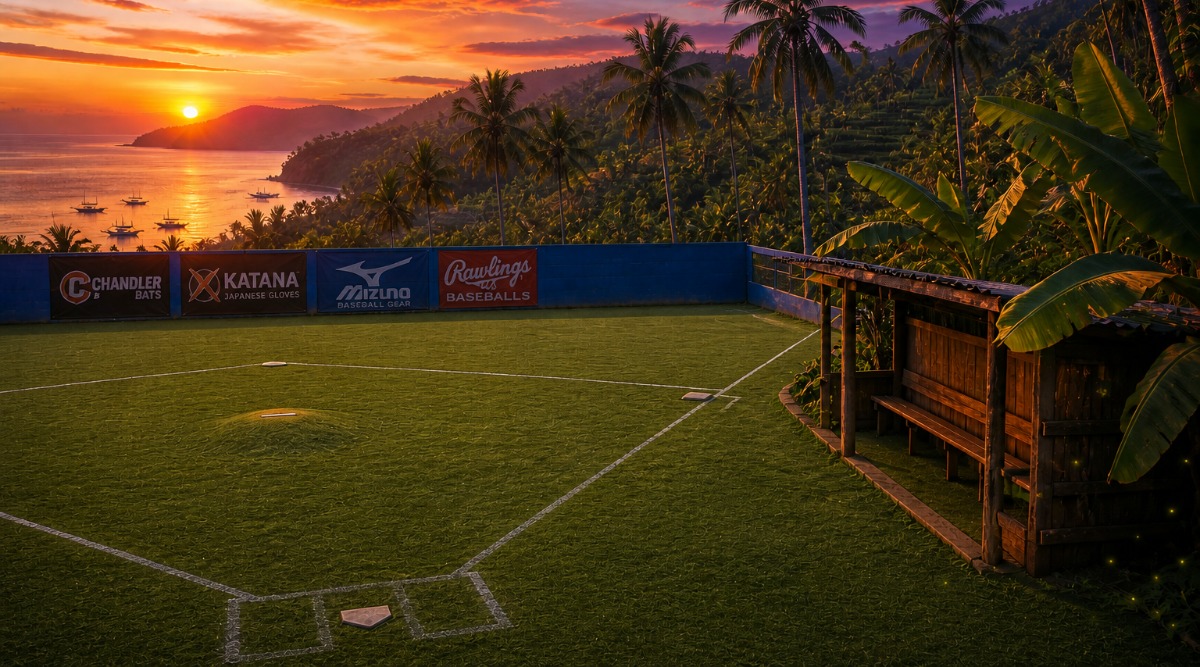
The Founders Club is an exclusive collective of visionaries driving the future of elite teenage baseball and softball prospects on Bohol Island. That is the formal description.
But it is a structure built by someone who has been a foreign coach, to give foreign coaches something he never had — a system that actually works in their favor.
Here is how it works. Founders purchase an Eco-Lodge Suite. Their suite generates booking revenue — somewhere between $600 and $1,500 a month depending on occupancy.
Meanwhile, coaches can live in a shared rental house for less than $100 a month. In a country where daily life costs a fraction of what it does in developed countries, it allows a foreign coach to actually save money while doing the work they love.
Think about that. A foreign coach in Europe deposits very little into savings — the cost of living absorbs nearly everything. A Founder in Bohol can put money away every single month.
The investment in an Eco-Lodge Suite can be recouped in one to two years. After that, the suite continues to generate income indefinitely. The lifestyle funds itself.
But it is the lifestyle itself that I really want to talk about. Because the numbers, as compelling as they are, miss the larger point entirely.
Bohol — Why Here
I fell in love with this island. Not the tourist version of it — though more than 1.4 million tourists visited in 2025, which tells you something about what this place offers the outside world.
I mean the quiet version. The version you only find when you stay long enough for the pace of life to sink into your bones and rearrange something in you.
Fresh fruit. Fresh vegetables. White sand beaches. Friendly people. Talented young athletes who play like they have something to prove — because they do.
For a baseball and softball coach, this is not an assignment. It is a paradise. And I say that as someone who has coached in Europe, who has lived in Asia, who grew up in America and knows exactly what the Western world offers and what it costs you to have it.
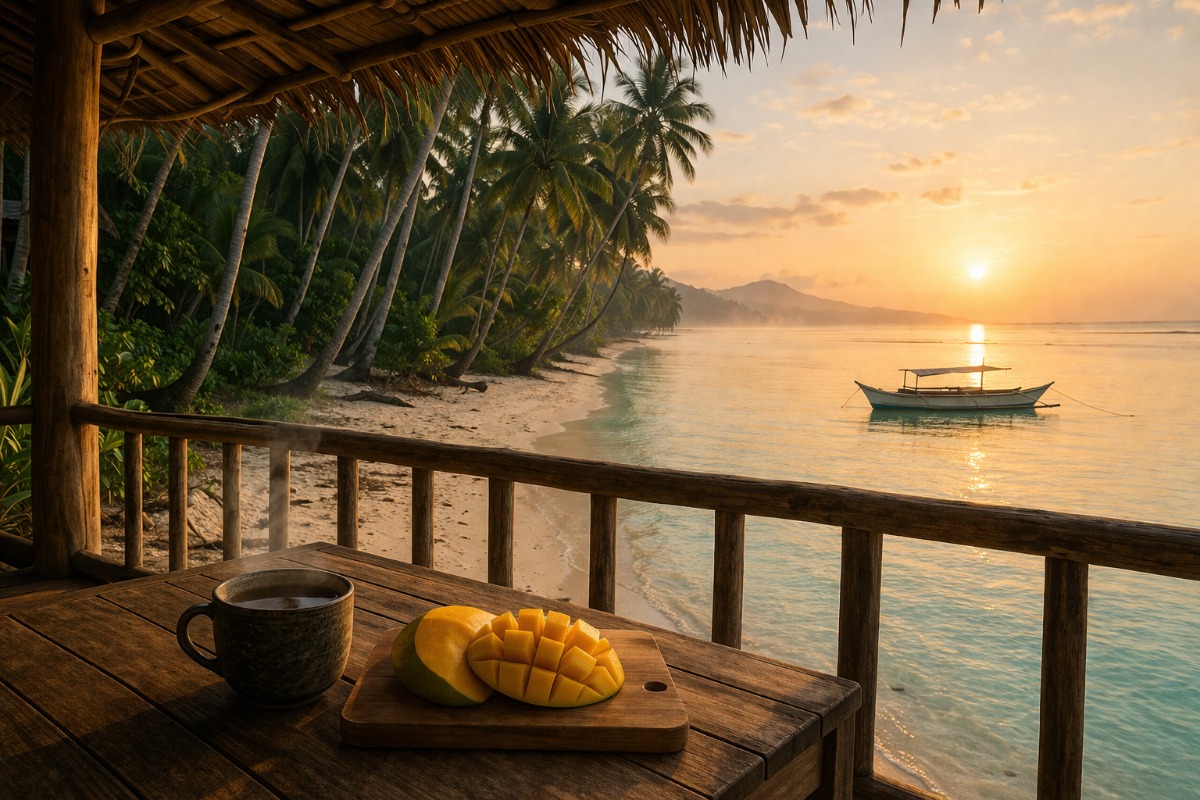
I love Texas. I genuinely do. But Texas does not compare with the island lifestyle. That is not a knock on Texas. It is simply the truth about what Bohol is — something genuinely different from the hustle and pressure that defines life in most of the developed world.
Lerma and I are simple people. We live frugally. We do not need a lot. What we need is for this mission to work because the kids are the real heartbeat of everything we are building.
Neither of us will draw a monthly salary from the Bohol Coconuts. The founders are emphatic about this: the mission exists to uplift kids from low-income families, and the money needs to go where the mission lives.
“Lerma and I will not draw a salary from the Bohol Coconuts. Seventy percent of operational funds go to equipment, the soup kitchen, and academic and social programs. The mission has to mean something. That is how you prove it means something.”
Seth — The Call I Will Never Forget
Recently I had a phone conversation with a young American coach. He had the perfect profile of the type of coaches we are recruiting.
Seth is single. Ambitious. Genuinely interested in building an international coaching career rather than waiting for a door in a crowded domestic market to open.
He was the type of person who would have been a natural fit — the kind of coach who could arrive in Bohol and immediately feel the pull of the place, the pull of the kids, the pull of something that actually matters.
I did not ask him to purchase an Eco-Lodge Suite. I did not pitch him. I refuse to be a salesman about this. Lifestyle decisions — real ones, the kind that require a person to reroute their entire life — do not come from a sales pitch.
These decisions come from something that ignites inside a person’s own chest. Either the idea finds a home in you when you hear it, or it does not. No amount of persuasion changes that equation, and I would not want it to.
But I think about him. I think about the coaches like Seth — I have heard from nearly 20 of them now, from the U.S., Canada, Australia, and Japan — who are quietly asking themselves whether there is a version of a coaching life that looks different from what they are currently living.
Some are looking for a version that matters more. Pays back more than a paycheck. Connects them to something larger than a single program, a single season, a single team.
I sold newspaper advertisements once in my life. I know what it feels like to push something on someone. I will never do that with the Founders Club.
The coaches who are meant to be here will find their way here. The ones who are serious — and a handful already are — will feel it. You cannot manufacture that. You can only build something worth feeling.
The Mission — Why It Cannot Wait
I want foreign coaches who want to be part of a historic mission. Not a comfortable posting. A historic one.
The development of MLB and NPB prospects from Bohol Island over several years is not a small ambition. It has never been done. That is exactly why it matters.
The children waiting for us are not from comfortable homes. They come from families where a baseball glove is not a birthday gift — it is a luxury that requires a plan.
These will show up to practice with that particular hunger that only comes from having very little and wanting very much.
For any coach who has ever stood next to that kind of athlete and felt it in their chest — that energy, that urgency, that undecorated desire — you already know there is nothing else quite like it in sport.
That is what the Founders Club protects. That is what every Eco-Lodge Suite funds.
That is what Lerma and I are building on this island — not just a baseball program, but a genuine pathway out of poverty for families who have been waiting on someone to show up and take them seriously.
The Brunei Baseball and Softball Association showed me what first-class hospitality for a foreign coach looks like. The Nepal Baseball and Softball Association showed me what the absence of structure costs.
Three decades of international coaching have given me a very clear map of where to go and where not to go — and every mile of it points to this island, these kids, and this moment.
The Founders Club is open. The Eco-Lodge Suites are ready. The mission is real.
The only question is whether the right people will feel it.
Moore or Less is a sports editorial column by Coach Merv Moore, Head Coach of the Bohol Coconuts Baseball & Softball Club.
Learn more about the Founders Club → | Read all Moore or Less columns →