
How the Coconuts Soup Kitchen Will Work When It Opens
A practical preview of how the soup kitchen will operate, the pricing structure, who it is designed to serve, and how the Coconuts see food access as directly connected to their athletic mission.
There is a question that serious baseball organizations eventually have to answer — not about swing mechanics or arm strength, but about something more fundamental. Can a player truly develop to their potential when their family is struggling to put food on the table?
For the Bohol Coconuts Baseball and Softball Club, the answer to that question has shaped one of the most ambitious community programs in Philippine youth sports: a full-scale soup kitchen rooted inside Barangay Cambanac, designed to feed athletes, support families, and reduce the financial burden of daily life for the people the club depends on most.
The soup kitchen has been in development for well over a year. It is not a charity project. It is not a publicity stunt.
The low-cost eatery is the cornerstone of the club’s entire livelihood strategy — a self-sustaining food canteen built on drastically reduced prices, a local agricultural supply chain, and a vision that connects every meal served to the long-term success of Bohol’s first homegrown Major League Baseball prospect.
“The rising cost of food prices in Bohol over the last decade has increased food hunger in low-income families. We are solving a real problem — not someday, but now.”
Food Costs Are Rising. Incomes Are Not.
Anyone living on Bohol Island in recent years understands the squeeze. Grocery prices have climbed steadily over the last decade, and for the low-income families whose children make up the foundation of the Coconuts club roster, that squeeze is felt every single day.
The cost of a simple meal — rice, a vegetable dish, a bowl of soup — can consume a disproportionate share of a household’s daily budget. When coaches see a talented young athlete losing energy at practice, or missing sessions entirely, nutrition is often the invisible factor no one is addressing.
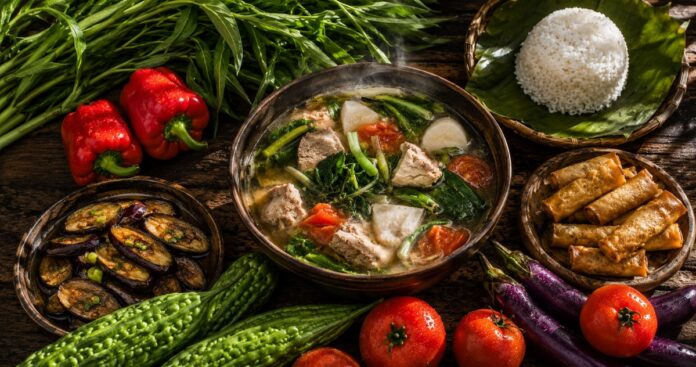
That is the direct problem the Coconuts Soup Kitchen was designed to solve. By operating a canteen with prices set well below the market rate, the club aims to give its members access to quality food without forcing families into painful tradeoffs between eating and other essentials.
Members Pay Less. That Is the Point.
The soup kitchen will operate on a two-tier pricing model. Club members receive access to significantly lower prices across the entire menu. Non-members may also eat at the canteen, but they pay a standard rate.
The difference in price is not incidental — it is the mechanism by which membership in the Coconuts club becomes economically valuable to every family in the barangay, whether or not their child is a starting shortstop.
| Menu Item | Member Price | Non-Member |
|---|---|---|
| Soups & Mains | ||
| Sinigang / Beef / Fish / Chicken Soup | ₱40 | ₱50 |
| Vegetables & Sides | ||
| Vegetable Dish (Chop Suey, Ampalaya w/Eggs, Sprouts, etc.) | ₱20 | ₱30 |
| Adobo Beans | ₱20 | ₱30 |
| Lumpia (3 pieces) | ₱20 | ₱30 |
| Rice & Noodles | ||
| Steamed Rice | ₱10 | ₱15 |
| Vegetable Fried Rice | ₱20 | ₱30 |
| Chicken Fried Rice | ₱30 | ₱40 |
| Vegetable Pancit Canton | ₱20 | ₱30 |
| Vegetable Pancit Bihon | ₱20 | ₱30 |
| Chicken Pancit Canton | ₱25 | ₱35 |
“The main objective is to reduce the daily food budgets of our club members. If a family saves even twenty pesos a day on meals, that adds up. That matters.”
Grown in Backyards. Served at the Table.
What makes this soup kitchen genuinely different from a conventional canteen is where the ingredients come from. The Coconuts are not relying on a middleman distributor or a wholesale market.
The club growing their own supply chain inside the barangay itself — through two interlocking programs that put local residents at the center of production.
The first is the club’s agricultural partnership program. As of April 2026, twenty-two residents of Cambanac had enrolled as backyard garden partners.
The club provides those residents with free seedlings across ten essential crops: green beans, bell peppers, eggplants, bitter melons, tomatoes, onions, carrots, kang kong, and assorted greens. In exchange, the residents care for the plants in their own backyards and containers.
When the vegetables are harvested, the club buys them at fair market prices for use in the soup kitchen. Any surplus is sold at the club’s mini food store.
The second program addresses protein. Through the club’s Animal Husbandry and Livelihood Program, six Cambanac families are currently raising seven pigs and more than 100 chickens. The club provides the baby pigs and chicks at no cost. The families handle housing, feeding, and daily care.
When the animals are grown, those families have two options: sell the livestock back to the Coconuts at a 50 percent discount, or sell on the open market and split the revenue equally with the club. Either way, the club ends up with access to locally-raised meat at below-market rates — which goes straight into the soup kitchen’s stock pots.
“This program benefits both the club and families of club members. This is just one of the ways the Coconuts Club will help local residents increase their household income.”
Building a Circular Economy. From the Ground Up.
The Coconuts describe what they are building as a circular economy — a closed-loop system where no resource or labor goes to waste, and where every participant both contributes to and benefits from the whole.
In theory, a backyard garden in Cambanac feeds the soup kitchen, which feeds the athletes, whose performance elevates the club, which in turn funds more seedlings for more backyards. The loop reinforces itself.
“We’re building a circular economy where everyone contributes and everyone benefits.” — Lerma Moore, Cambanac Councilwoman and Coconuts General Manager
What is striking about this operation is that Lerma Moore is not just the club’s general manager — she is a sitting Kagawad, an elected member of the Cambanac Barangay Council. Her role in local government and her role in the baseball club are not separate identities. They are inseparable.
The soup kitchen is not a private business operating beside the community. It is the community organizing itself from within its own elected leadership.
That dual role gives the project a kind of institutional legitimacy that a standalone baseball club could not manufacture. When Moore speaks about the soup kitchen, she is speaking as the person responsible both for the welfare of young athletes and for the broader well-being of every household in the barangay. The two missions are one mission.
“There’s pride in seeing your vegetables served at the community kitchen. These families are not just growing food — they are feeding the next generation of Filipino athletes.”
Athletes First. But the Door Is Open.
The primary beneficiaries of the Coconuts Soup Kitchen are the club’s players and their families. For a youth athlete training several days a week under Bohol’s heat, access to affordable, nutritious meals is not a luxury — it is a performance variable.
The club is clear about this connection. Hungry athletes do not develop into prospects. Families worried about food costs do not invest emotionally in a baseball program. The soup kitchen removes those friction points at the most basic level.
But the canteen is not exclusive. Non-members are welcome, they simply pay a higher rate. In a barangay like Cambanac, that open-door policy matters.
It means the kitchen functions as a genuine community resource, not a club perk accessible only to those already inside the network. It also means the soup kitchen can generate revenue from the broader public that helps subsidize the member discount — a self-funding mechanism built into the pricing structure from day one.
A typical backyard garden enrolled in the Coconuts agricultural partnership program can generate between ₱500 and ₱1,000 each month for a participating household — money that often goes directly toward school supplies or household essentials.
High Demand. More Sponsors Needed.
The club reports that demand to join the agricultural partnership and animal husbandry programs is already well ahead of available capacity. Six families are operating under the livestock model. Twenty-two residents are cultivating backyard gardens.
According to the organization, local appetite to participate is “incredibly high” — but expansion depends on finding additional sponsors to provide more seedlings, more chicks and piglets, and more resources to scale.
The soup kitchen itself has also faced delays from its original February 2026 opening target, with the updated timeline pointing toward June 2026.
When it does open, it will represent the culmination of more than a year of planning, infrastructure-building, and community enrollment — not a canteen that appeared overnight, but one grown deliberately from the soil of Barangay Cambanac itself.
“I hope one day every home in Cambanac is raising livestock and growing vegetables for the Coconuts Soup Kitchen. That is the vision. That is what we are building toward.”
For the Bohol Coconuts, developing the first native-born Filipino Major League Baseball superstar has always been the headline mission. But the people building this club have understood from the start that you cannot develop a prospect in a vacuum.
You develop a prospect by developing a community. The soup kitchen is not a side project. It is the infrastructure of the dream — built plate by plate, garden bed by garden bed, in a barangay on a tropical island that has decided to feed its future rather than wait for it.