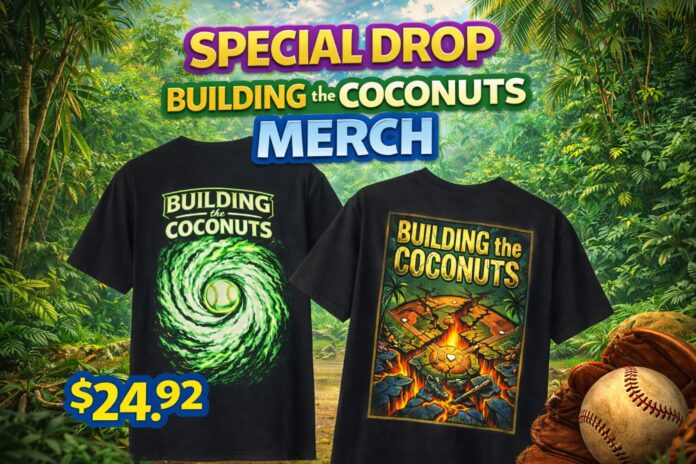

In an era of endless inventory, the Bohol Coconuts are doing the opposite—releasing designs once, then retiring them forever.
The blue light of a smartphone illuminates a face in the darkness of a bedroom in Dallas, or perhaps a flat in London. It’s nearly midnight, and a fan of the “Building the Coconuts” YouTube reality series is scrolling through the latest merch drop. Their thumb pauses on the “King Cobra” tee—a striking, coiled design that mirrors the intensity of the training sessions currently unfolding in the Philippine jungle. They consider it for a moment, then decide to wait until the morning to grab their credit card.
When morning comes, the link is dead. The “King Cobra” has slithered back into the undergrowth, replaced by a “Super Typhoon Hoodie” or perhaps the “Lightning Pitcher” graphic. By the time most people notice a design, it is already on the verge of extinction. This isn’t a glitch in the digital storefront, nor is it a logistical failure. It is a deliberate, high-stakes game of “now or never” played out on the back of a baseball movement.
Why would a growing brand, one seeking to fund an elite baseball and softball academy in the heart of Bohol, intentionally pull its own products off the shelf just as they gain traction? The answer lies in a radical departure from traditional commerce. For the Bohol Coconuts, scarcity isn’t a limitation—it’s the strategy.
A Movement in Cotton and Ink
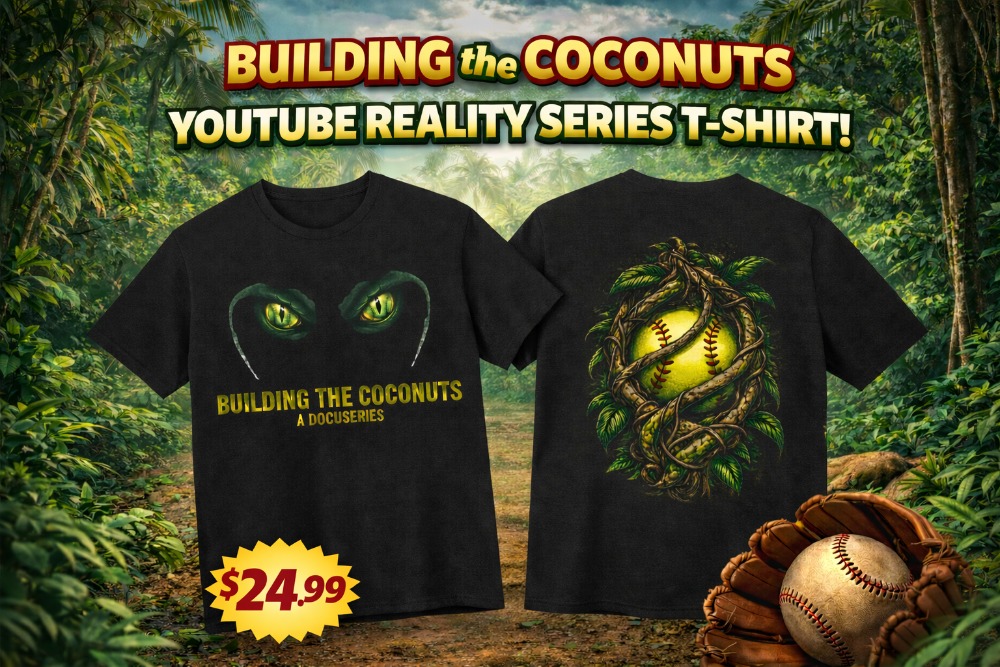
The Bohol Coconuts are more than just a sports club; they are a hybrid of an elite training academy, a global media project, and a socio-economic movement. To fund the dream of a world-class performance center in the Visayas, the organization has turned to “drop culture,” a model that swaps mass production for scarcity-driven demand. By launching highly specific designs—like the “Natural Disasters Tee” or the “Snake Eyes & Softball Vines Eye T-Shirt”—and retiring them permanently, the Coconuts are turning clothing into a timestamp of a journey. If you are wearing the shirt, it means you were there when the cameras were rolling.
The Death of Unlimited Merch: Why Endless Inventory Is Losing Its Power
In the old world of retail, the goal was simple: keep the shelves full. If a design sold well, you printed ten thousand more. But in the age of the “attention economy,” endless inventory is a slow-moving poison. When a product is always available, the urgency to own it evaporates. It becomes a commodity rather than a badge of honor.
“We saw what was happening with big-box sports apparel,” says Lerma Moore, General Manager of the Bohol Coconuts and a local government councilor. “You buy a shirt, and ten thousand other people have the exact same one for the next five years. There’s no soul in that. We wanted our merch to reflect the reality of building something in Bohol—it’s fast, it’s unpredictable, and if you miss a moment, you can’t get it back.”
By moving away from “always-on” inventory, the Coconuts are tapping into a fundamental shift in how people shop. Modern supporters don’t just want a shirt; they want to feel like they are part of a specific chapter of the story. The death of unlimited merch is, in reality, the birth of a more meaningful connection between the fan and the mission.
From Streetwear to Sports: The Strategy of the “Drop”
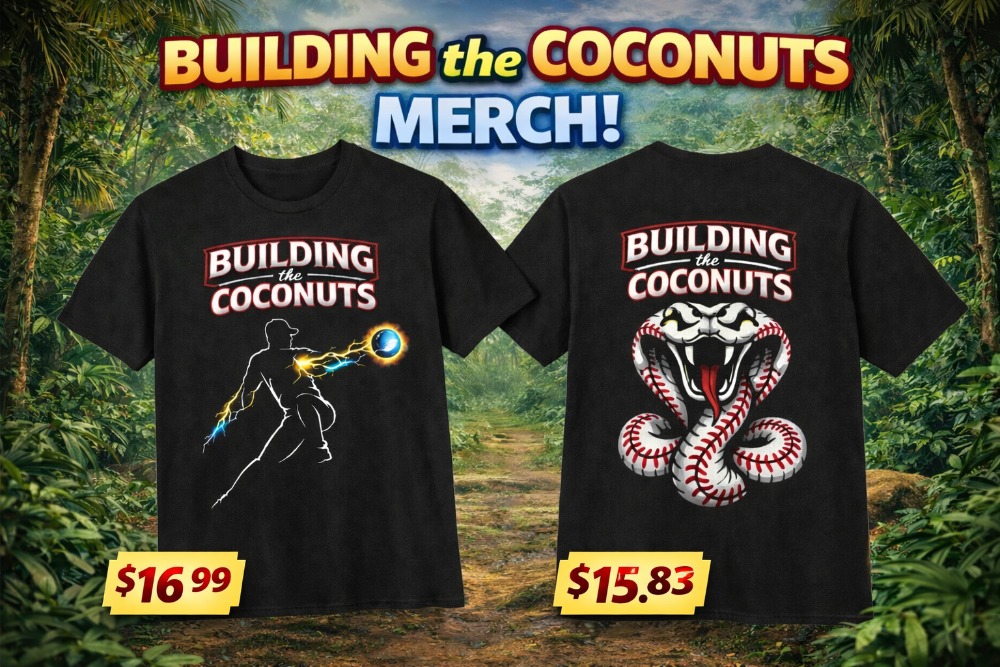
Borrowing a page from the playbook of elite streetwear brands, the Coconuts have embraced “drop culture.” This isn’t about selling fabric; it’s about selling an emotional driver. The “Cobra and Bat” design or the “Storm & Lava” t-shirt aren’t just aesthetic choices—they are visual representations of the grit required to build a baseball diamond in a tropical jungle.
“Every time we release a new design, we’re signaling a new phase of the ‘Building the Coconuts’ series,” Lerma Moore explains. “When people see the ‘Super Typhoon t-shirt,’ they know it’s tied to the challenges we’re facing on the ground right now. It creates a sense of exclusivity. You aren’t just buying a hoodie; you’re joining the inner circle for that specific struggle.”
The Psychology of “Never Coming Back”
There is a unique weight to a product that carries a permanent retirement date. Scarcity increases perceived value, turning a standard tee into a collectible. Ownership becomes personal and story-driven. For instance, the “Lightning Pitcher” t-shirt isn’t just about baseball; it’s about the energy and speed of a project that is racing against the clock to start construction in June 2026.
When a fan wears the “Softball Vines & Snake Eye” design, they are signaling that they were an early adopter—a “Founding Friend” who supported the project before the walls of the Coconuts Performance Center were even standing. It is a signal to other fans that says, I saw the struggle, and I was there.
Built for Flexibility: The Model Behind the Scarcity
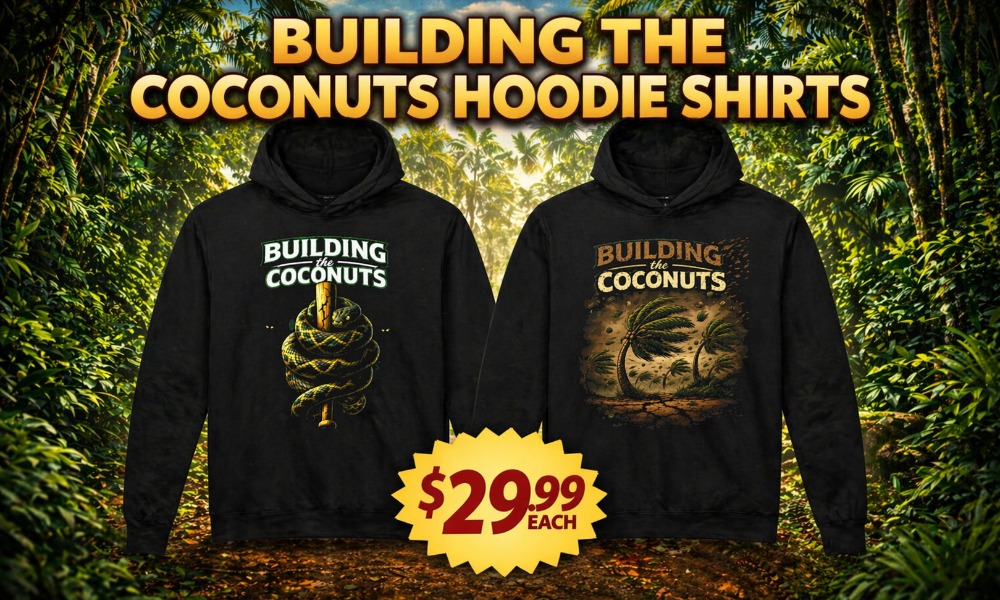
The engine behind this “retire-it-forever” philosophy is a sophisticated print-on-demand infrastructure. By utilizing platforms like Printify, the Coconuts avoid the crushing overhead of bulk inventory. Products are created only after they are purchased, meaning there is no overproduction and no wasted capital sitting in a warehouse.
This flexibility allows the brand to be incredibly responsive. If a particular episode of the YouTube series features a major weather event, the “Typhoon” designs can be pushed to the forefront. Once that narrative arc concludes, the design can be retired instantly, keeping the catalog fresh and the community on its toes.
“It allows us to be as nimble as our athletes,” says Moore. “We can launch a design like the ‘Building the Coconuts Baseball T-Shirt’ to celebrate a milestone and then pull it once we move to the next goal. It keeps the store from becoming a graveyard of old ideas. Everything you see is current, and everything you see is temporary.”
Global Signal, Limited Access
The reach of the Bohol Coconuts is global, with supporters stretching from the United States to Europe and across the Philippines. This geographic spread makes the limited drops even more effective. When a fan in a small town in Texas sees a fellow supporter in Manila wearing a retired “King Cobra” tee, it creates an immediate bond—and a pang of “fomo” (fear of missing out) for those who hesitated.

This social proof is the most powerful marketing tool the organization has. It isn’t an ad; it’s a conversation. “Where did you get that?” becomes the bridge to the website, only for the new visitor to find that the “King Cobra” is gone, but the “Super Typhoon” has just arrived.
The Rule That Defines the Brand
The core principle is simple: once a design is gone, it is gone. Most brands would succumb to the temptation of reprinting their bestsellers, but the Coconuts view that as a betrayal of their early supporters.
“If we brought back the old designs, we would be diluting the identity of the people who stood by us on day one,” Moore asserts. “We want to reward the people who are paying attention. If you took the leap and bought that shirt when we were just a dream on a YouTube screen, you deserve to have something that no one else can get later.”
The Value of the Unseen
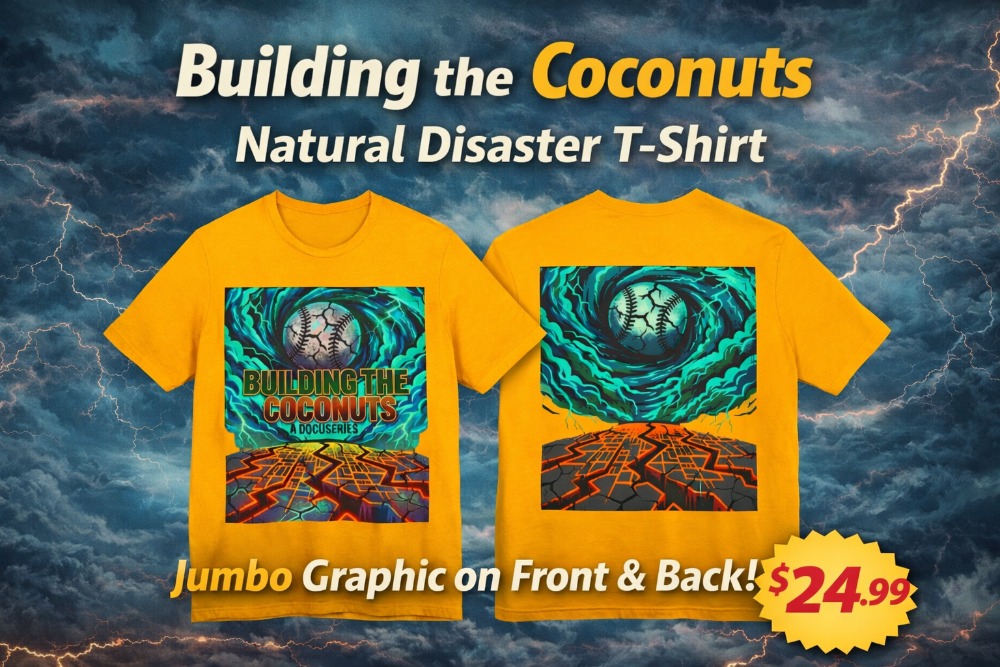
Back to that fan scrolling late at night. They’ve learned their lesson. The next time a design like the “Cobra and Bat” or the “Natural Disasters Tee” appears, they won’t wait for morning. They understand that in Bohol, the most valuable designs aren’t the ones you see everywhere—they are the ones you’ll never see again.
This isn’t just about buying clothing; it’s about claiming a seat at the table of a global movement. As the jungle mist clears and the construction crews prepare for June, the “Building the Coconuts” merch remains the only way to wear the history of the build as it happens. If you want to be part of the story, you have to be fast. Because in the world of the Coconuts, the only thing more certain than the sunrise is that the best designs are already on their way out.
To see what’s currently available—and what’s about to disappear—visit the Bohol Coconuts Store.