

The tropical sun breaks over the limestone hills of Bohol with a heat that feels heavy before the clock even hits eight. In the valley below, the landscape is quiet but expectant—a stretch of untamed earth bordered by coconut palms, waiting for the first crack of a bat. It is a silence full of promise. Here, on what will soon become a carved-out patch of Philippine soil, a diamond is still a vision—one being built not by a billionaire’s whim, but by a global collective of believers.
This isn’t just a future baseball academy; it’s a movement rising from the Visayan soil. While the traditional sports world has spent decades perfecting the art of the passive spectator, the Bohol Coconuts are effectively blowing up the model. They aren’t asking people to just watch; they’re asking them to become part of the story—even before the first pitch is thrown.
“We aren’t building a museum here,” says Coach Merv, the veteran skipper whose Texas drawl has become a fixture of the local landscape. “Most fans are used to watching a team from behind a glass screen or a stadium railing. We’re opening the gates and saying, ‘Come inside.’ We want people to see the dirt and the sweat, and to realize that when this facility finally stands, they own a piece of the struggle it took to get there.”
Coach Merv returns to Bohol next month, and with his arrival, the baseball program will officially begin. Until then, the grounds are a canvas of potential—raw land that will soon echo with practice, training, and the rhythm of a sport taking root in a new home.
The One-Of-A-Kind Mission

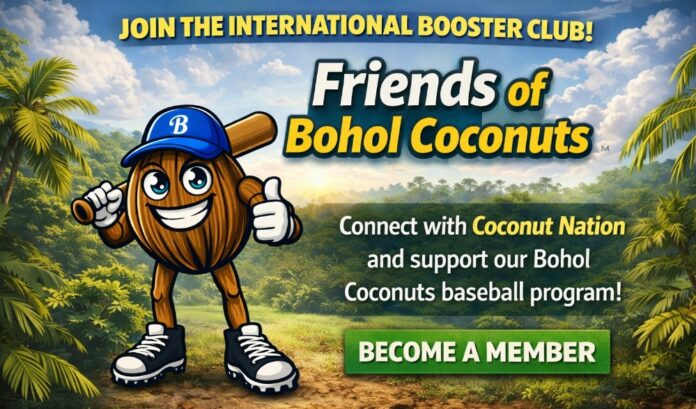
The mission is an ambitious, multi-headed beast. Under the Coconuts banner, future athletic training collides with educational programs, a soup kitchen, and agricultural initiatives. As the organization prepares to break ground on the Coconuts Performance Center this June, a new Friends of Bohol Coconuts membership is serving as the bridge between the island and the rest of the world. It marks a fundamental shift in how we define fandom: moving away from the transactional purchase of a jersey toward radical, active participation.
In the old world of sports, you are a customer. In Bohol, you are an insider. “Don’t watch us grow,” Coach Merv likes to say. “Come grow with us.”
That growth is increasingly physical. While Bohol is already a darling of the international tourism circuit—famed for its Chocolate Hills and wide-eyed tarsiers—the Coconuts are pitching a different kind of destination: purpose-driven travel. The vision is a direct pipeline from a YouTube subscriber’s living room to the Philippine earth. The club isn’t just selling a dream; they are preparing for the day a member from Chicago or Berlin steps off a plane, not as a tourist, but as a stakeholder.
And when they arrive, they are treated not as a guest, but as VVIP family.
Exclusive Membership Perks

Members of the Bohol Coconuts International Booster Club receive a special rate at the Eco-Lodge Suites for stays of one to four weeks—long enough to shed the skin of a sightseer and become part of the local rhythm. These are not sterile resort rooms. They are gateways into the real Bohol: mornings scored by roosters, afternoons spent walking the future infield, and evenings shared over home-cooked adobo at a neighbor’s table.
Here, members are embedded directly into the village. They eat dinner with local families. They sit as judges for academic contests. They compete in—or coach—adult recreation leagues. They cheer from the front row at community events like the Youth Talent Show. They tour Bohol’s hidden attractions not as tourists on a bus, but with residents showing off their hometown.
However, the true exchange runs deeper. Members are invited to pass their knowledge to the local community through teaching seminars for adults—practical skills like money management and home-based business setup—and lively night classes in cooking, gardening, painting, knitting, crochet, embroidery, sewing, video editing, digital art, English language, baking, cheese making, chocolate making, craft beer brewing, yoga, meditation, aerobics, Zumba, and much more. Every skill shared becomes a thread in a stronger community fabric.
“We want people to see the reality of what we’re doing,” says Lerma Moore, the club’s General Manager and a local government councilor. “When a visitor stands on these grounds and sees the kids in the academic contests or at the soup kitchen, they realize this is about so much more than sports. They’re seeing the faces of the people they’ve been supporting from thousands of miles away. They aren’t visitors; they’re family.”
The Two Worlds of Bohol
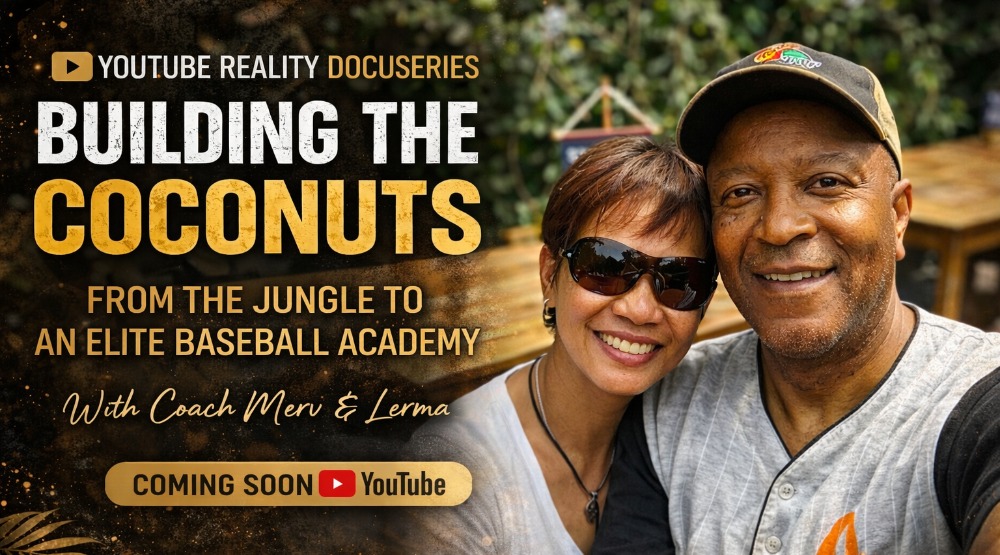
This level of access is the currency of the Coconuts’ ecosystem. While the upcoming docuseries “Building the Coconuts” will offer a polished window into the project, members get the raw, unedited reality.
They see the construction delays, the logistical hurdles of island life, and the real-time challenges of developing a program from the ground up—including the anticipation of Coach Merv’s arrival next month. They also experience the kind of VVIP treatment most travelers will never know: the honor of breaking bread with a local elder, the pride of watching a student master a new skill you taught them, the quiet thrill of becoming a name, not a number.
For Moore, the distinction between this and a standard subscription is vital. “This isn’t a streaming service where you hit play and walk away,” she says. “It’s a stake in a mission. You have a hand in whether these kids have the meals they require or the programs that give them hope. Every bit of progress on that future field is a direct result of that involvement.”
The model reflects a larger shift in the media landscape, where community-driven ecosystems are beginning to replace centralized, corporate-controlled narratives. The Coconuts operate as a hybrid: part future sports franchise, part media house, and part social engine. By bypassing traditional gatekeepers, they are allowing their supporters to co-author the story of the club’s rise.
As the June construction date approaches, the roadmap for these insiders is only expanding. They are the stakeholders who will ensure that when the first pitch is finally thrown at the Coconuts Performance Center, it won’t just be a victory for the players on the field, but for the global community that refused to stay in the bleachers.
A Unique Partnership

For now, the field remains quiet. But not for long. Next month, Coach Merv returns from his fundraising trip in Texas. Soon after, the first young athletes will step onto the dirt. The build is still in its early hours, and the dust is far from settled. For those looking for a finished, corporate product, the world is full of Major League stadiums. But for those who want to be there for the first brick and the first scholarship—and to live, even for a few weeks, as a true part of the community—the gates in Bohol are wide open.
In this corner of the Philippines, the future of sports may not belong to the teams with the biggest TV deals—but to the people willing to help build them from the ground up. And for those who answer the call? A seat at the family table awaits.