

By Merv Moore
Sports Director & Head Baseball Coach
I want to share something I’ve seen in Filipino homes that I can’t get out of my head.
A family — five kids, maybe six — sitting together, and somewhere in the middle of an ordinary evening, a decision gets made. Not out loud, usually. It doesn’t need to be. Everyone in the room already understands the math. There is enough money to give one child, maybe two, a real shot at higher education. The others will find a different way. Get a job. Go abroad and send money home. Figure it out.
The parents aren’t bad people. They are loving people making an impossible calculation with the money they have, which is never enough. They are doing the only rational thing available to them in a system that has never offered them any other option.
But I keep thinking about the other kids. The ones who weren’t chosen. Because I’ve seen what that does to a child — not in a dramatic, movie moment kind of way, but quietly, over time. You watch a kid start to fold inward. You watch the light behind their eyes dim a little. Not because they are stupid. Not because they don’t have gifts. But because the people they love most in the world looked at them and, however gently, communicated: not you. Not this time. Maybe not ever.
That is the wound I’m trying to put a bandage on with the Bohol Coconuts. And I know a bandage isn’t a cure. But you have to start somewhere.
I Am Not a Rich Man Chasing a Tax Write-Off

I want to be clear about something, because I’ve noticed that when foreigners come to the Philippines and announce they want to help, people are rightfully skeptical. They’ve seen it before. The well-meaning outsider with the grand plan and the big checkbook who is gone in six months when the novelty wears off or the donations dry up.
Lerma and I are not that story.
We are two people who have lived simply and chosen deliberately. We are not chasing money with this club. We never were. And I say that not to make myself sound noble — I say it because it explains every decision we’ve made about how this academy is being built, and specifically, why it is being built around the poorest kids first rather than the easiest kids whose parents can afford to pay for their training.
The truth is, I made that choice once before, a long time ago, and I’ve never once wished I’d made a different one.
Switzerland and the Decision That Changed My Life
I was 25 years old in 1992 when I sold my newspaper.
That’s not a sentence most people expect to hear from a baseball coach. But I had started The Seagoville Gazette at a young age, built it up, and then stood at a crossroads with a check in my hand and a question in front of me: What do you actually want to do with your life?
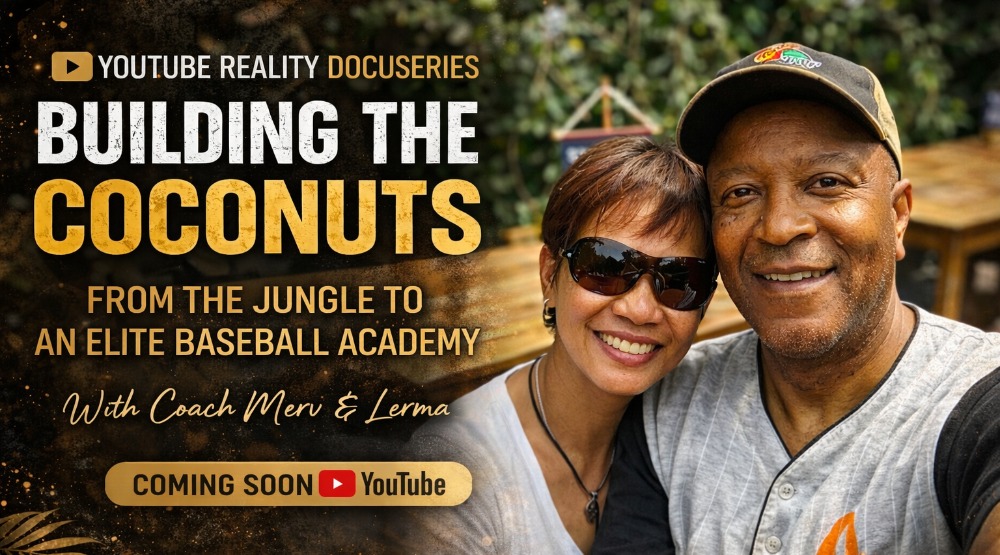
The world around me had a very clear answer for what I was supposed to do. Take the money. Build something else. Grow the portfolio. Chase the next thing. I had watched plenty of people do exactly that and arrive at 50 years old wealthy and hollowed out, wondering what happened to the thing they used to love before they got so busy being practical.
I didn’t want that.
I sold the newspaper and went to Switzerland to coach baseball.
Most people thought I had lost my mind. Switzerland is not what you’d call a baseball hotbed. It was hard, underpaid, and uncertain — everything that sensible people are supposed to avoid. But I was coaching. I was doing the thing that made me feel most alive. And I was learning, every single day, what it actually takes to develop a young athlete from the ground up.
“Most people chase money their whole lives, and I did the same thing,” I’ll admit that freely. “But I was 25 years old when I decided to chase my passion instead of money, and I have no regrets.”
None. Not one.
That decision is the reason I understand something in my bones that a lot of sports program builders don’t: money follows passion. It does not lead it. The moment you build a program around financial optimization instead of genuine belief, you’ve already lost the most important thing — and the kids can tell. They always can.
Why the Poorest Kids First. Not the Easiest Kids. The Poorest.

Here is the part that I suspect some people will push back on.
Conventional wisdom says you build a sports program by finding the best talent available, developing it, showing results, and then expanding access over time. Make it work first with the kids who have resources, the argument goes, and then you’ll have the credibility and funding to reach the ones who don’t.
I’ve seen that model. I’ve watched it for decades in multiple countries. And what I’ve observed is that the expansion almost never comes. The program gets comfortable with the kids who are easy. The waiting list for everyone else gets longer. Equity becomes a future project, and the future keeps getting pushed back.
We are not doing that.
From the first tryout, the Coconuts program is being designed so that a kid from a fishing barangay with no equipment, no prior coaching, and a family that can’t afford to lose a single day of productivity can walk in and compete on equal terms with anyone else. That is not an aspiration we’ll get to eventually. It is the starting point. It has to be, because the kids who need this most will not wait around politely while we figure out our logistics.
“Most of these kids will never have an opportunity to chase any type of dreams because of poverty, and I want to change that.”
Not some of them. Not the ones who are already halfway there. The ones who have been told, by circumstance and silence and the quiet math of a family’s impossible budget, that dreaming is not for people like them.
What That Child Carries

I want to come back to those families I mentioned at the beginning. The ones making the impossible calculation.
Because I don’t think we talk honestly enough about what it feels like to be the child who wasn’t chosen. We talk about poverty in terms of economics — income levels, food security, access to services. Those things are real and they matter enormously. But there is another kind of poverty that is harder to measure and just as devastating, and it lives in the self-image of a child who has been quietly, lovingly told that they are not the one.
That child goes to school and sits next to a sibling who has been handed the family’s hope, and they feel the difference. They grow up in a house where their potential is never quite invested in the same way, and they learn to stop expecting investment. They become teenagers who don’t raise their hand. Who don’t try out. Who watch other kids pursue things with the detached certainty that those things are not available to them.
The talent is still there. The hunger is still there. The capacity to be great at something — anything — is absolutely still there. But the belief has been quietly, systematically eroded by a life that never gave them a reason to maintain it.
That is what I want to walk into and disrupt. Not with a speech. Not with good intentions. With a program that shows up, puts a glove in a kid’s hand, and says: We see you. We think you’re worth investing in. And we’re going to prove it by actually doing the work.
We Don’t Need to Be Rich to Do This Right

Lerma and I talk about this a lot. The pressure that comes from well-meaning people who suggest that to truly help, you need to be doing something bigger, something more funded, something with a more impressive sponsorship roster.
We disagree.
What changes a child’s life is not the size of the budget. It is the sincerity of the commitment. It is whether the adults in the room actually believe the child in front of them is worth believing in. A child who has grown up in poverty has an extremely finely tuned radar for authenticity. They know, almost immediately, whether you are there for them or there for the story you get to tell about helping them.
We are there for them.
That is the foundation of the Coconuts, before the performance center, before the docuseries, before any of it. Two people who have lived simply, chosen passion over money, and decided that the most important thing they could do with the time they have left is make sure that some kids on this island — kids in a home where the calculation is being made, where names are quietly being counted and crossed off — gets a different kind of message.
You have a dream? Good. So do we. And we built this place for you.
One Last Thing

I am aware of how ambitious this is. I am aware that the odds are steep and the road is long and there will be days when the whole thing feels impossible.
I’ve felt impossible before. In 1992, selling my newspaper to go coach baseball in Switzerland felt impossible. Spending 17 months alone in Bhutan, especially being quarantined in a hotel for the first week, felt impossible. But this is different. Some days it feels more than impossible.
The difference between the people who do impossible things and the people who don’t is rarely talent or money or connections. It is the decision — made once, clearly, and then honored every single day — to refuse to let the difficulty of something be a reason not to try.
I made that decision at 25. I’m making it again now, in Bohol, with Lerma beside me and a clearing in the jungle and a June start date and a head full of kids who are about to get the one thing that poverty was never able to take away from them: a chance.
That is enough to start with.
That has always been enough.
Don’t Be Good. Be Great.
Moore or Less is a column by Merv Moore, Sports Director and Head Baseball Coach of the Bohol Coconuts Baseball & Softball Club. For sponsorship inquiries or to support a kid who deserves a chance, visit Bohol Coconuts Sponsorships.