
The Cost of a Dream Per Child
A breakdown of what it actually costs to give one kid from a low-income Bohol family a full year inside the Bohol Coconuts program — and how that number compares to what it costs society when that same kid has no pathway at all.
There are children in Bohol right now who will never be asked what he or she wants to be when they grow up. Not because no one loves them. Not because they lack the intelligence or the fire. But because the province they were born into has not yet built the kind of infrastructure that makes that question feel worth asking.
These kids will wake up tomorrow, and the day after, and the year after that, inside the same set of circumstances they were born into — unless something interrupts the pattern.
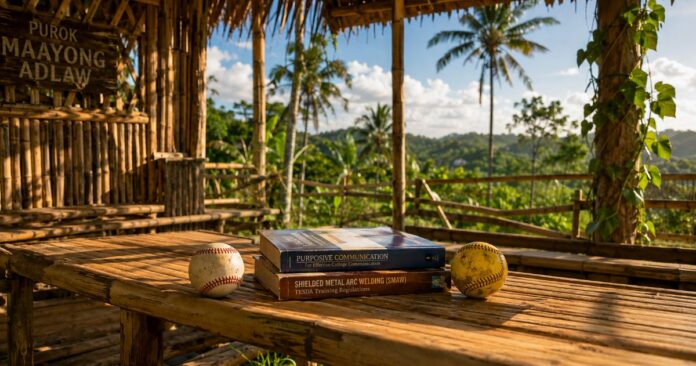
The Bohol Coconuts Baseball and Softball Club was built around the belief that a baseball glove, coaches who show up, and various pathways (baseball, softball, college, and trade school) can be that interruption.
But believing something and being able to pay for it are two very different things.
Before the first child steps onto a practice field, the program’s founders have spent considerable time working out the honest arithmetic of what it actually costs to change a life — and what it costs society when no one does.
This isn’t charity. This is an investment. When you break down what it costs to give one kid a real year inside this program, everything included, and you hold that number next to what it costs when that same kid ends up with no direction, no skills, and no future, the math isn’t even close.
The Bohol Coconuts program is built around five pillars of investment for every child who enters: equipment and gear, professional coaching (₱0), academic support, trade school access, and social activities. Each carries its own cost. Together, they represent something no single pillar could achieve alone.
To place that number in context: six thousand and four hundred pesos is less than a one-day guided tour in Bohol. It is a fraction of what a single roundtrip international airline ticket costs. But it is the full price of giving one child from a low-income Bohol family a structured, supported, coached, and academically integrated year that most children in the developed world receive simply by showing up to school.
I see these kids every day in Cambanac and Baclayon. I know their families. I know what they go home to. When someone tells me we can give a child a full year of coaching, school support, and a road to a real skill for six thousand pesos, I want every business owner and every expat who loves this island to understand exactly what that money means here.
The more difficult accounting — and the one that development economists have been making for decades without producing nearly enough action — is the cost of doing nothing.
When a child in Bohol grows up without structured mentorship, without academic scaffolding, and without a vocational credential, the expenses do not disappear.
These costs are simply transferred to public health systems, to local government social welfare offices, to families stretched beyond their capacity, and to a provincial economy that loses the productive contribution that child might have made.
- Structured daily routine and coach accountability
- Academic performance monitored and supported
- Trade school pathway identified and accessible
- Mentorship from adults who invest in the child’s future
- Community identity and sense of belonging
- Employment-ready skills by late adolescence
- Family given genuine hope and a measurable plan
- No structured time outside of school, if attending
- Academic decline goes undetected and unaddressed
- No vocational credential by early adulthood
- Informal economy labor, low wages, limited mobility
- Higher vulnerability to early dropout and underemployment
- Social welfare dependency risk increases over time
- The cycle of poverty extends to the next generation
The social cost of a young person without a pathway in the Philippine provinces is difficult to quantify precisely, but the directional evidence is not ambiguous.
Research from the Philippine Institute for Development Studies consistently links youth underemployment in provincial areas to generational poverty cycles, elevated public health costs, and suppressed local economic growth.
The cost is not zero. It is simply invisible — distributed across systems and timelines that never appear on a single balance sheet.
Baseball and softball are the doors we’re using. But what we’re really building is a generation of young people in Bohol who know how to work hard, show up, and earn something. A kid who learns that on a baseball field carries it everywhere for the rest of his life.
It is worth being specific, because specificity is what separates a program with integrity from a program with a brochure. The six thousand and four hundred pesos the Bohol Coconuts invest in a child each year does not buy a trophy or a highlight reel.
These pesos buys a glove that fits a hand that has never held one before. It buys dreams for kids whose dreams have always been limited. It buys self-confidence for kids who never dared to dream big. It buys hope for a brighter future.
In the Philippine labor market, a TESDA National Certificate — the standard credential from the country’s Technical Education and Skills Development Authority — increases a young worker’s earning potential by an estimated 40 to 60 percent compared to an unskilled laborer with equivalent education. For a child who enters the Bohol Coconuts program at age ten and completes the full pathway by age eighteen, the vocational credential alone represents a lifetime earnings difference that dwarfs the total cost of their participation in the program many times over.
Lerma Moore, who serves as the club’s General Manager and as a Kagawad in Barangay Cambanac, brings a perspective to this accounting that no spreadsheet can replicate.
She has watched families in her barangay make impossible tradeoffs for years — choosing between a child’s school fees and the family’s food supply, between a child’s future and this week’s survival.
The Bohol Coconuts program is designed specifically so that families like the ones she serves do not have to make that tradeoff for one more generation.
These are not numbers to me. These are children I walk past every morning. The question I keep asking is not whether this program is worth the money. The question is how we let so many years go by without building it sooner.
The Bohol Coconuts are in pre-launch. Coach Merv arrives in Bohol next month. The program is set, the model is built, and the children who need it most are already there — in barangays across this island, waiting for someone to show up with a plan and mean it.
The math has never been complicated. The only question has always been whether enough people are willing to look at it honestly and act.