

This is a sponsored post. The Bohol Coconuts Baseball and Softball Club may receive a commission for qualifying purchases made through the link in this article. This does not influence our editorial standards.
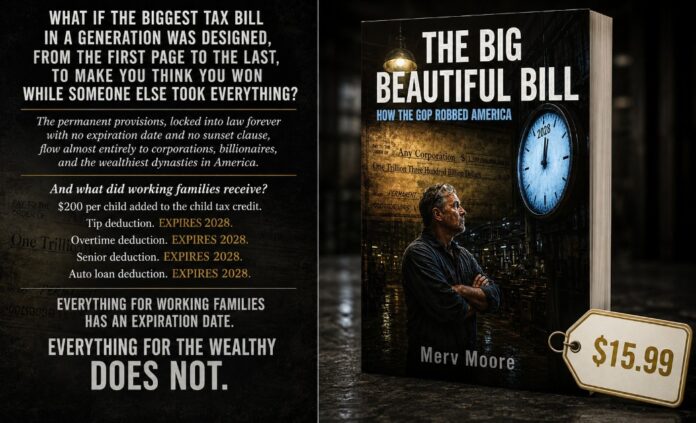
The Heist Was Legal. The Book That Exposes It Is Essential.
Merv Moore’s new paperback names names, traces the money, and explains exactly who gained and who lost when the Big Beautiful Bill became law.
They Called It Beautiful for a Reason
Naming matters in politics. Call something beautiful and voters imagine something worth having. Call it big and they assume it covers everyone.
The Big Beautiful Bill covered everyone, all right. It covered the wealthiest Americans in layer after layer of permanent tax protection. For everyone else, it offered temporary crumbs with expiration dates already stamped on them.
Merv Moore’s new book, “The Big Beautiful Bill: How the GOP Robbed America,” is the clearest, most documented account yet of what actually happened when this legislation passed on July 4, 2025.
Trump’s $7.5 Billion Cabinet
Moore opens by introducing the architects. Trump’s cabinet had a combined net worth of approximately $7.5 billion. Elon Musk alone brought an estimated $431 billion in personal wealth to the table.
These were not public servants who happened to be wealthy. These were billionaires who, Moore argues, shaped policy with a direct financial interest in the outcome. The promise to drain the swamp became, in practice, the most expensive swamp in American history.
The Billionaire Playbook, Explained
Moore traces the two-tax-cut strategy with particular clarity. The 2017 Tax Cuts and Jobs Act was deliberately written to expire. That expiration was not a flaw. It was the plan.
It forced a second round of cuts in 2025 that made the wealthy’s benefits permanent while working families continued receiving temporary relief. A Berkeley study cited in the book found that the Forbes 400 paid an average effective tax rate of just 24% between 2018 and 2020. Everyone else paid 30%.
The Big Beautiful Bill did not fix that gap. It widened it permanently.
The Buy, Borrow, Die Strategy
One of the most eye-opening sections of the book explains how the wealthiest Americans legally avoid income taxes almost entirely.
They buy assets. They borrow against those assets at low interest rates, generating tax-free cash. When they die, their heirs inherit the assets at a stepped-up cost basis, meaning the accumulated gains are never taxed. The estate tax exemption raised to $30 million per couple ensures the dynasty continues untouched.
Your paycheck is taxed as ordinary income at rates up to 37%, plus Social Security and Medicare contributions. Their investment income is taxed at a maximum of 23.8%, and only when they choose to sell.
The bill did not close that gap. It locked it in forever.
The Fine Print They Hoped You Would Miss
Moore devotes a full chapter to the provisions buried in the legislation that received almost no media coverage. The carried interest loophole was expanded. Valuation discounts for estate taxes were preserved.
Business interest deductions were adjusted to benefit private equity. Research and development expensing provisions favored large corporations specifically.
None of these items made the press releases. All of them cost working Americans billions.
This book was written for people who are tired of being told the system is too complicated to understand, and who suspect that complexity is itself part of the design.
Moore makes it simple. He makes it human. And he makes it impossible to look away.
Read it. Share it. And show up ready to vote in September.