

When the Before and After Don’t Yet Exist
The marketing challenge of building emotional investment in a program that has no alumni, no success stories, no before and after photographs, and no proof of concept beyond a couple’s conviction and a domain name.
Every sports program you have ever rooted for had a beginning you did not witness.
There was a first meeting nobody knew about. A founding conversation between two people who believed something was possible before anything existed to prove it.
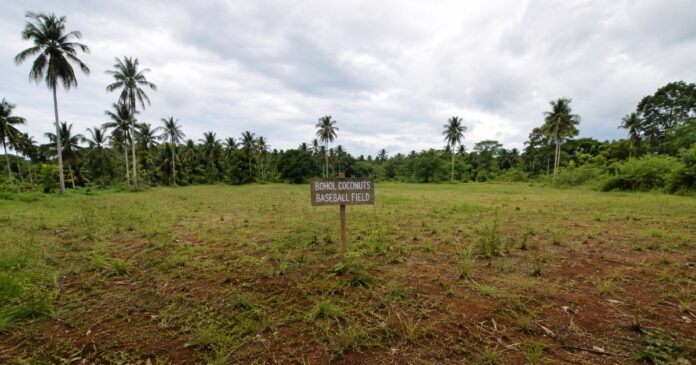
The Bohol Coconuts Baseball and Softball Club is at that exact moment right now. And doing it in plain view of the internet.
The hardest story to tell in sports marketing is the one with no data yet. No highlights reel. No testimonials from players whose lives were changed. Just intention, documented in real time.
That is exactly the position Lerma Moore occupies as General Manager of the Bohol Coconuts. And she is not hiding from it.
It is a different conversation. And it is, by almost every conventional marketing measure, a harder one.
The sports industry runs on proof. Scouts want stats. Sponsors want reach. Communities want to know a program will still be here in three years. All of it requires a track record that, by definition, a new club cannot have.

The Bohol Coconuts are doing something that most programs would not dare: narrating their founding in public, in real time, before there is anything to show for it.
The website exists before the facilities do. The media strategy is in place before the first at-bat. The General Manager is giving quotes before there is a scoreboard to reference.
This is not bravado. It is a calculated approach rooted in a belief that transparency about the process is itself a form of proof.
Barangay Cambanac is the geographic anchor for the club’s field and operations. That connection to a specific, real community addresses at least one of the credibility gaps that new programs typically face: rootedness.
This is not a club without a place. It has a place. The structure and the players are still ahead, but the land and the community are not abstractions.
In an attention economy built on results, a new sports program is selling futures. And futures are, by nature, unverifiable at the moment of the pitch.

The standard playbook does not apply. You cannot boost a highlight reel that has not been filmed. You cannot share a testimonial from a player who has not yet played.
What you can do is make the founding process itself the content.
The people who find the Bohol Coconuts now, before facilities, before rosters, before a single box score, are a specific kind of person.
They are not waiting for proof. They are comfortable with conviction. They are early adopters in the truest sense: people who want to say, eventually, that they were there at the beginning.
Every program that now has trophies once had none. Every club with a rich alumni base once had zero former players. Every before-and-after story once had only a before.
The Bohol Coconuts are not in an unusual position. They are in the universal position of every sports organization at the moment of its founding.
What is unusual is the willingness to say so out loud, to build a media presence around the founding itself, and to invite a community to witness it in progress rather than waiting until success has made the story safe to tell.
That is the actual marketing challenge. And the answer being pursued here is to make the challenge the story, until the story writes itself.