
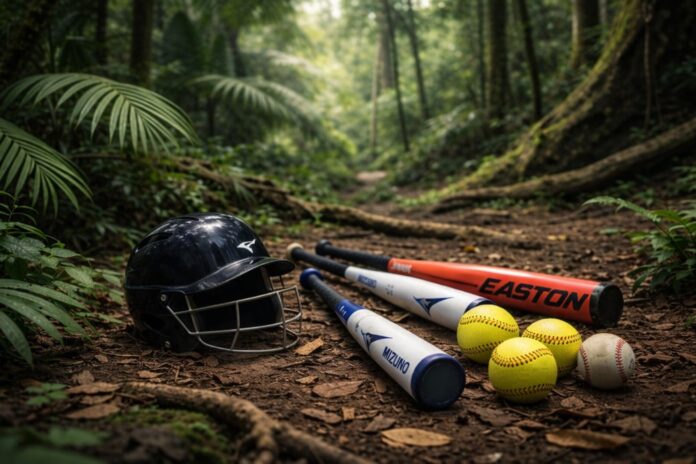

Under the canopy of towering coconut palms and the thick, humid air of the Visayas, a new brand of player development is taking root. It isn’t happening in a multi-million dollar complex or behind the glass of a climate-controlled academy. Instead, it is being forged in the Bohol jungle, where the sounds of cracked bats and rhythmic drills will signal the rise of the Bohol Coconuts Baseball and Softball Club.
As the club prepares for its official May 2026 launch, the focus is squarely on a high-intensity, high-repetition training model designed to bridge the gap between local talent and professional-level prospects. This is not recreational baseball; it is a laboratory for elite development where the environment itself is used as a competitive edge.
The Jungle Advantage: Purposeful Development
For many, the dense vegetation and tropical heat of Bohol might seem like a hindrance to a sports program. For Merv Moore, the founder and head coach of the Coconuts, the setting is a mechanical necessity.
“The jungle isn’t just where we play; it’s our greatest developmental advantage,” he explains. “We don’t need the bells and whistles of a suburban complex to build a hitter. We need dirt, space, and a relentless commitment to the grind. When a kid trains in this heat, with these repetitions, they develop a level of focus and durability that you just can’t manufacture in a comfortable environment.”

The program is built on a “built different” mentality that prioritizes the youth members as the absolute focal point. Every drill and every station is designed with a professional trajectory in mind. To understand the depth of this commitment, one must look at the underlying philosophy of the club: Why Try The Impossible?
The Architecture of the Swing: 1,000 Swings to Greatness
At the heart of the Coconuts’ success is a hitting philosophy that favors volume and visual processing. The daily routine is a grueling cycle of hundreds—of swings. Unlike traditional batting practice, which often involves long periods of standing around, the Coconuts utilize a station-based system that maximizes every minute on the field.
“I like players who hit frozen ropes and hard groundballs,” Coach Merv says, describing his tactical approach to the game. “Strikeouts and pop-ups are a pitcher’s best friend—just like a double play. We train our hitters to put the ball in play. We want to force the defense to make a play on every single swing. If you’re hitting line drives, you’re creating pressure. Pressure wins games.”
To achieve this, the club utilizes low-cost, high-yield tools like wiffle balls and tennis balls. The erratic flight patterns of a wiffle ball in the tropical wind force hitters to develop superior bat control and surgical precision. Tennis balls are used to sharpen hand-eye coordination and tracking. “If you can barrel a shifting wiffle ball in the midday heat, a 90 mph fastball in a stadium becomes a stationary target,” Merv adds. “It’s about building a swing that can survive any environment.”
Managing the Mission: The Coconuts Infrastructure
While the action happens on the dirt, the logistical engine is managed by Lerma Moore, the club’s General Manager. With 27 years of marriage alongside Coach Merv, she oversees the daily operations that keep the club running in a challenging environment. For Lerma, the mission is about more than just box scores—it’s about community stability and future growth.
“The kids are the heartbeat of everything we do,” Lerma says. “Our goal is to provide a structure where they can succeed not just as athletes, but as disciplined individuals. We are building more than a team; we are building a pathway for these families. That is why our fundraising and our media presence, like the “Building the Coconuts”, are so critical. It allows the world to see the talent that exists right here in the jungle.”

Lerma’s role becomes especially vital during the rainy season. While many local programs shut down when the monsoon rains arrive, the Coconuts move their focus toward the indoor grind of campus life.
“There are no days off from the books,” she notes. “The academic contest preparations stay consistent, and the social activities simply move to the common halls. We teach the kids that the weather isn’t an excuse to become inactive—and that the rain is just part of the student environment. That academic durability is what will benefit these kids in their adult lives.”
The Station System: A Breakdown of the Grind
The 250-day-a-year workload is designed to develop elite prospects, especially talented hitters. Coach Merv is fond of hitting stations that develop multiple skill sets simultaneously:
- Tee Work: The foundation of mechanics. Players use the tee to lock in a repeatable swing path that eliminates “slop” and focuses on center-cut contact.
- Soft Toss: A station dedicated to rhythm and timing, teaching the hitter to generate explosive power from the ground up.
- Front Toss & Live Reps: This is where the drills meet game-feel. Players are forced to recognize pitches and react with professional-level intent.
- Bunting Stations: Often an afterthought in modern baseball, the Coconuts prioritize bunting as a fundamental tool for manufacturing runs and moving runners.
The Psychology of the Jungle: “That’s Okay”

Beyond the physical reps, Coach Merv places a heavy emphasis on mental toughness, utilizing his background in psychology to develop resilient athletes. Practice is intentionally competitive, matching players of similar skill levels for head-to-head challenges. “Comfort doesn’t create growth,” the 59 year-old coach explains. “Competition does. We simulate game pressure every single day so that when they actually get into a game, it feels easy.”
A signature element of the Coconuts’ mental coaching is the phrase “That’s Okay,” which Coach Merv repeats constantly during games and drills. It is a psychological anchor designed to prevent “spiraling” after a mistake. “Confidence is a skill that must be trained, just like a swing,” says the native Texan. “Mistakes are the toll we pay for development. I want kids who walk with a swagger because they know they’ve outworked everyone else on the island.”
A Global Vision for 2027
The current training ground is only the beginning. The club has ambitious plans for 2027, including land acquisition to build a sports park with dedicated baseball and softball fields. This vision has already attracted a global audience, particularly through the Move2Bohol initiative, which encourages Japanese, Koreans, Americans, Europeans, and Canadians to relocate to the island for a laidback island lifestyle.
“Greatness is a journey, not a moment,” Coach Merv concludes. “Baseball in the jungle isn’t a limitation—it’s the edge. We are built different because our environment demands it. And we’re just getting started.”