
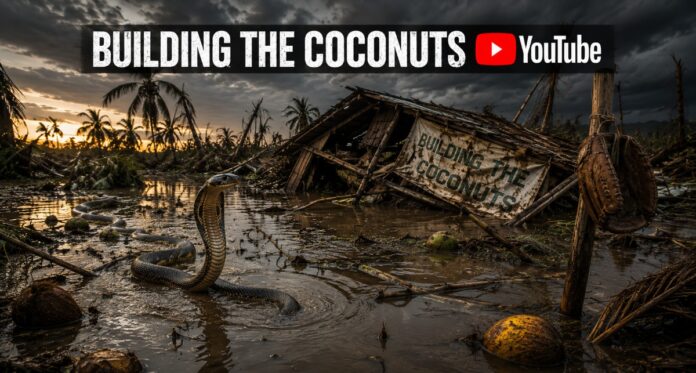
The Business of Building Something in a Place That Fights Back
Why This Story Crosses Every Genre
“Building the Coconuts” YouTube reality docuseries is not a sports show. It’s not a construction show. It’s not a family show. And, it’s not a travel show. It is all of them simultaneously — and that intersection is exactly where sponsors want to be.
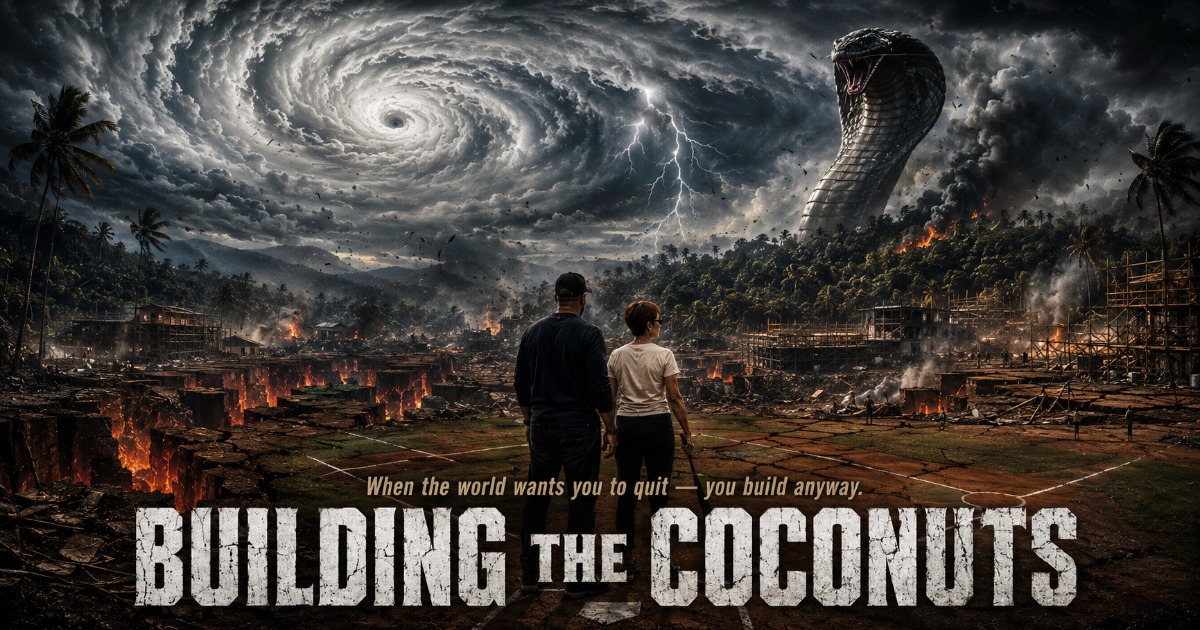
Every great documentary series has a pitch. A one-line answer to the question: what is this? “Building the Coconuts” does not have a one-line answer. It has four. And that is not a weakness. That is the entire point.
Television and digital content exist in categories. Sports goes here. Home renovation goes there. Family sagas over on that channel. Travel shows somewhere else.
The categories exist because they make acquisition conversations easier, because they help algorithms find audiences, and because most projects actually do belong in one lane.
But occasionally, a story arrives that does not belong in any single lane. It belongs in all of them at once. “Building the Coconuts” is that story — and understanding “why” changes the calculus entirely for anyone thinking about getting behind it as a sponsor, a broadcaster, or a media partner.
The conventional wisdom in content development says: pick a lane. Networks understand lanes. Advertisers know how to buy against lanes. Algorithms distribute lanes. Pick one, commit to it, and make the clearest possible version of that thing.
That wisdom is not wrong. It describes how most content gets made, how most content gets sold, and how most content gets found. But it also describes why most content is forgettable.
When everything belongs neatly to a category, nothing surprises. Nothing earns the word-of-mouth that lane-breaking content generates. Nothing crosses the invisible walls between audiences and brings in the viewer who never would have clicked on a sports show — but clicked on this one because someone told them it was actually about a family.
“We are not building a baseball and softball program with a camera following us around. We are building a story that happens to have sports in it. Those are completely different things.“
The distinction Merv Moore draws is not semantic. It is structural. A sports show about building a youth baseball and softball academy would follow the program.
That kind of show would track wins and losses, skill development, the first game, the first championship. That is a perfectly valid show. It has a clear audience, a clear genre, a clear pitch.
“Building the Coconuts” is doing something different. The sports facility is the stage, but the drama being performed on that stage is simultaneously about what it takes to build anything in a place that resists you.
This docuseries is about what it means for two people to pursue a shared vision in one of the most beautiful and demanding landscapes in Southeast Asia, and about what a community looks like when it starts to believe in itself.
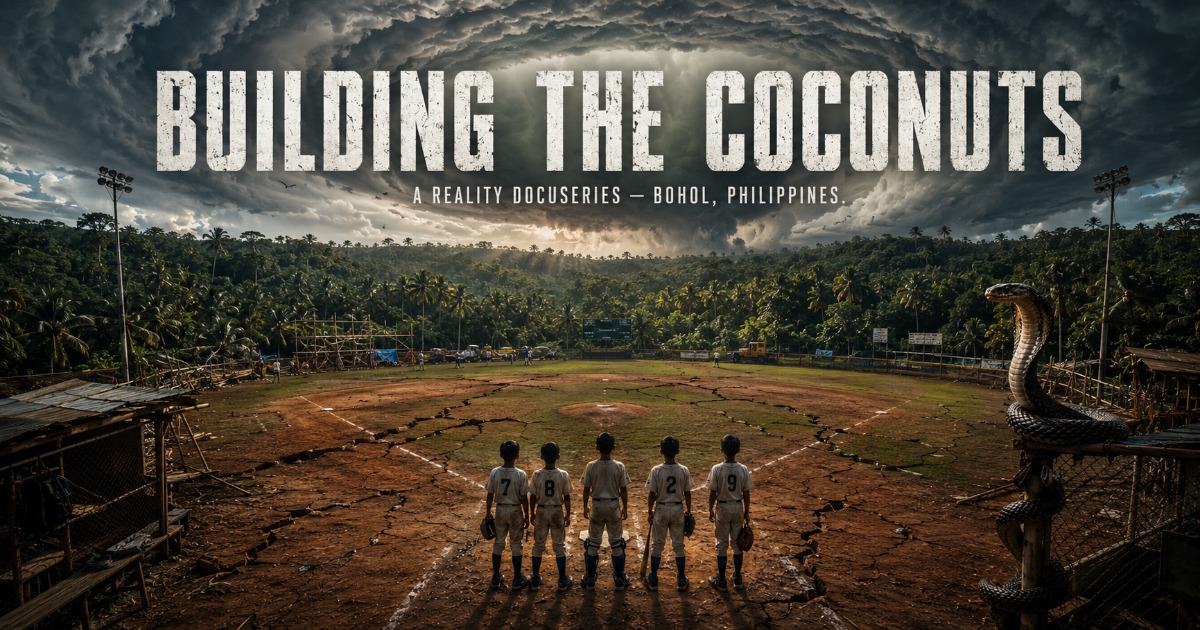
“People ask me: is this a sports project or a community project? I tell them the same thing every time. In Cambanac, those are the same sentence.“
For a sponsor, the question is not which genre this series belongs to. The question is how many audiences one sponsorship buy can access at once.
Single-genre content delivers a single audience. Cross-genre content like “Building the Coconuts” delivers a stacked audience — viewers who came in through four different doors and are now all watching the same content, all seeing the same brand.
That stacking effect is difficult to replicate through multiple individual buys. A sports sponsor, a home improvement sponsor, a family brand, and a travel company would each have to purchase separately to reach the audiences that “Building the Coconuts” delivers in one integrated placement. The economics alone make the case.
The scenes are not edited to serve one genre. They are written, shot, and composed to carry all four simultaneously. That is the craft challenge at the heart of “Building the Coconuts” — and it is also the thing that makes it different from anything else currently being made in this space.
The reason “Building the Coconuts” crosses every genre is not because it was designed to appeal to everyone. It crosses every genre because the story itself is that large. You cannot tell it honestly inside a single category. The categories are too small for what is actually happening in Cambanac.
The history of the most successful documentary series, the ones that become cultural events rather than just content, is a history of stories that refused to be categorized.
These docuseries found their way into conversations among people who don’t normally watch the same things, because the story contained something for each of them without pandering to any of them.
“Building the Coconuts” is the kind of series that a sports fan recommends to their parent who doesn’t watch sports.
A person living in Tagbilaran recommends to a cousin in Toronto who is homesick for something real. A construction show devotee recommends to a friend who only watches family dramas. The cross-genre reach is not manufactured. It is structural. It is in the story itself.
Getting behind “Building the Coconuts” is not a sports buy, a construction buy, a family buy, or a travel buy. It is all four — at a cost that reflects none of that multiplication. The wider the net, the more valuable the cast. And this series casts the widest net currently available in Philippine community sports storytelling.
In Cambanac, Bohol, on a baseball infield being carved out of ground that does not give anything easily, a story is being assembled that belongs to no single shelf. That is not a classification problem. That is a competitive advantage — for the series, for its partners, and for everyone who gets in early enough to be part of what it becomes.