
The King Cobra Doesn’t Want You — And What That Taught Me About Fear
Three encounters with the world’s most feared reptile. A young mother with a bamboo stick. A coconut thrown in drunken bravado. And the slow, humbling realization that the snake was never the problem. I was.
Bohol Island, Philippines — May 2026
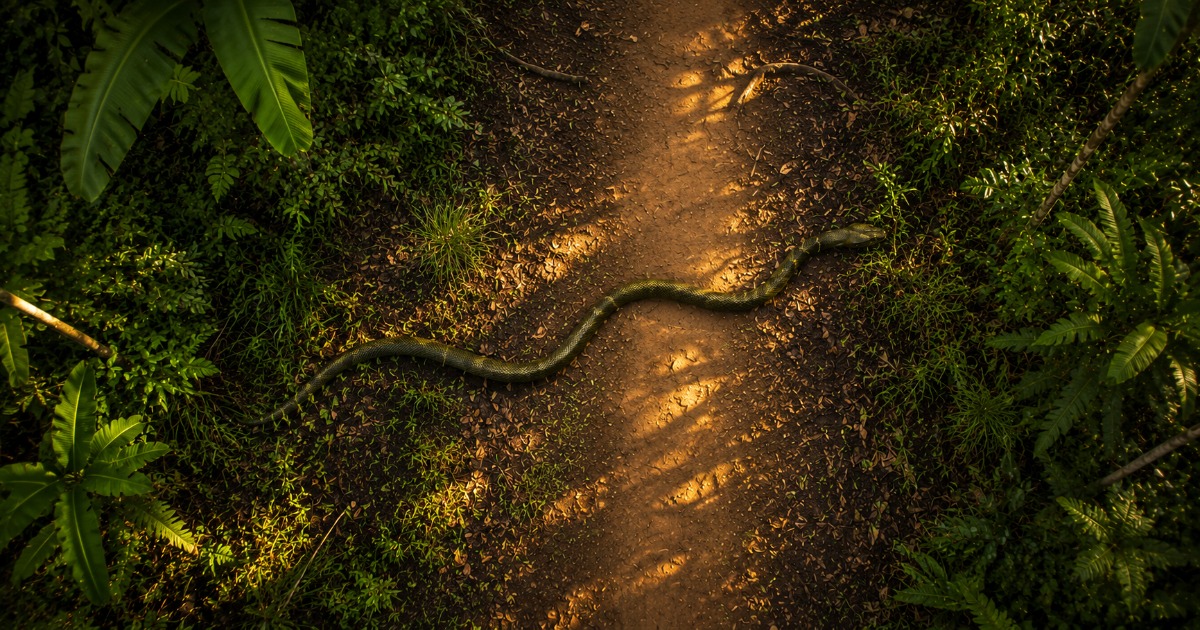
The King Cobra (Ophiophagus hannah) — native to the jungles and grasslands of Southeast Asia, including Bohol Island, Philippines.
I grew up in a place where the rule about snakes was simple: if you see one, you back away. If it’s coiled, you run. Rattlesnakes and water moccasins had built a permanent address in my nervous system long before I ever saw one in the wild. That’s the thing about fear. It doesn’t need an introduction. It moves in, rearranges all the furniture, and acts like it owns the place long before the snake ever shows up.
I relocated my family to Bohol Island in 2008, fleeing south from Manila after years of gridlock traffic, air you could taste, and the low-grade anxiety that comes from living inside one of Southeast Asia’s most overcrowded cities.
My wife Lerma had grown up on Bohol. Her family was there. A tourist island with white sand beaches were enough reasons to go, and what turned out to be far too little preparation for what was waiting for me on the other side of that move.
One week after arriving, we decided to walk to the beach. Ten minutes from our house. A trail cut through a vacant field. Our two elementary-age kids followed behind me, and Lerma trailing the pack. A casual family stroll. The kind of thing you picture when island life is finally making sense.
I stopped without thinking about it.
About five yards ahead of me, crossing the trail with the unhurried authority of something that has never once had reason to hurry, was the biggest snake I had ever seen up close.
Olive green. Eight to ten feet long. As thick around the body as my wrist. It moved at a pace I can only describe as purposeful — not fast, not slow, just absolutely certain of where it was going and completely uninterested in the fact that I was standing in the general vicinity of it.
For a fraction of a second, our eyes met. Then it disappeared into the high grass without a flinch, without a coil, without a single sign that my presence had registered as anything worth reacting to.
The snake didn’t see a threat. It saw an inconvenience it had already decided to ignore. That distinction took me years to fully understand.
I had seen King Cobras on the National Geographic Channel — the Indian variety, brown and hooded, being coaxed from wicker baskets by snake charmers. The snake in front of me was different in color but unmistakable in scale.
I stood there for several seconds after it vanished, doing a quiet inventory of my family and second-guessing my decision to leave a crowded city I detested. But the snake had simply left.
I pivoted the afternoon immediately. Mall instead of beach. My kids were happy to visit the Amusement Center. I needed an internet cafe. Within fives minutes of sitting down at a computer, I confirmed what I already suspected: Bohol Island is home to the King Cobra.
The longest venomous snake on earth. My new neighbor. I sat in that internet shop for a long time afterward. Not because I wanted more information. Because I needed to figure out how to feel about all of it.
“The snake didn’t see a threat standing on that trail. It saw an inconvenience it had already decided to ignore. That distinction took me years to fully understand.”
— Merv Moore, Bohol Coconuts
🏗 The Woman With the Bamboo Stick
A few years after that first encounter, we had built a house on a secluded mountain. Two neighbors within shouting distance. Jungle pressing in from all sides. It was exactly the kind of isolation I had come to Bohol to find, and most days it delivered everything I hoped it would.
One afternoon I was home alone, typing at my desk, when something at the edge of my peripheral vision made me stop. Not a sound. Not a shape I could fully make out. Just a wrongness in the corner of my eye that my brain processed half a second before my eyes fully caught up.
I turned around slowly.
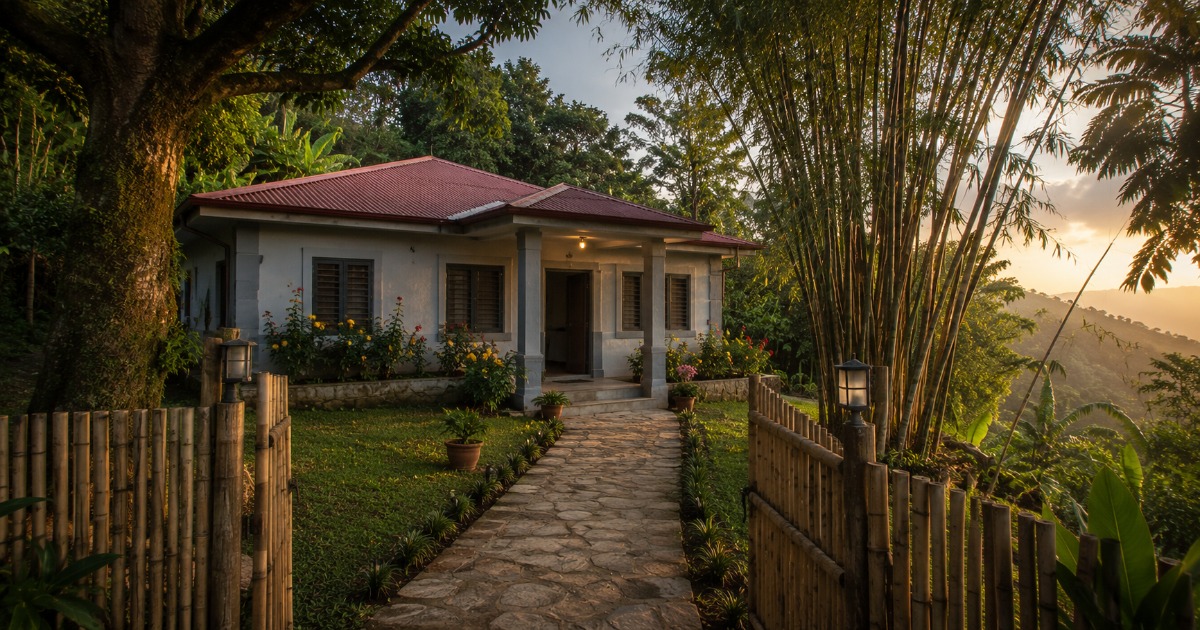
The mountain communities of Bohol are home to some of the most secluded and biodiverse terrain in the Philippines — and some of its most impressive wildlife.
A King Cobra had come through my open front door and was gliding across the floor toward an open bedroom with the same quiet confidence I had seen on the trail years before. It knew where it was going. I was simply a piece of furniture in the general vicinity.
I went out my front door. Not gracefully. But I went.
The only other person on that mountain with me that day was a twenty-year-old woman with her eight-month-old baby. She was outside nearby. I explained what had happened, which took longer than it should have because I was still processing it myself. She listened. She nodded. Then she handed me her baby.
She grabbed a six-foot bamboo stick, walked into my house, and handled the situation.
I stood at my front gate holding an infant, watching a young mother calmly do the thing I was too rattled to attempt. She didn’t try to kill the snake. She guided it.
The Cobra was true to its nature — and wanted nothing more than a way out. She gave it one. The six-foot snake was probably tracking a mouse. But it had left gracefully without attitude.
I stood there holding that baby, thinking about how the picture would look like to my friends back home in Texas, and I started to smile. It was humbling in exactly the way I needed at that moment in my life.
“She guided it patiently toward the exit with the kind of steady confidence that came from growing up in Bohol. The Cobra wanted nothing more than a way out. She gave it one. I stood at the gate holding the baby.”
— Merv Moore, on his neighbor’s quiet composure
🏈 The Coconut, the Cobra, and the Dumbest Thing I Have Ever Done
My third encounter with a King Cobra was, without question, the most intense. It was also one of the dumbest acts of my life. I could blame it on the alcohol. But that would be a reason stuffed with a lie.
It was fiesta day in Cambanac. My wife and kids had left earkier than morning on our motorcycle to visit her parents’ house, a fifteen-minute walk from ours. I arrived around noon, and after several hours of feasting and too much rum and coke, I decided to walk back home.
While crossing a wide field with low, flat grass, I saw the biggest King Cobra I had ever laid eyes on. Twelve to fourteen feet, easily. It was cruising steadily about thirty yards to my right, and based on our respective directions of travel, we were going to converge at approximately the same point — like two cars approaching a four-way intersection from different angles.
So I stopped. And then the Cobra stopped too — less than ten feet from me. Our eyes locked.
The idea that arrived in my head, fully formed and completely confident, was this: pick up old coconuts from the grass a few steps behind.
There were old, brown coconuts scattered everywhere, fallen months ago. I reached down slowly and picked up one in each hand.
I threw the first one. It sailed wide right. The snake did not move.
My second throw was considerably more accurate.
And that is when the King Cobra, the same animal I had watched cruise slowly across that field, the same creature that had entered my house and left when shown the door.
The snake exploded away from me at a speed that genuinely shocked me. Gone. In under five seconds. A fourteen-foot snake seemed almost like a blur as I watched it disappear.
I stood alone in that field for a long moment. Then I walked home. Sober enough by the time I arrived to understand exactly what had just been demonstrated to me.
“A fourteen-foot King Cobra darted away from me like a gazelle, yet with no legs. No cruise control. But the snake was never the aggressor. It was the first one to leave every single time.”
— Merv Moore, Fiesta Day, Cambanac
Fear Is Usually the Aggressor. Not the Snake.
Here is what sharing an island with King Cobras has taught me: the thing you are most afraid of almost certainly has no interest in you whatsoever.
The King Cobra crossed my trail in 2008 and kept moving. It entered my house and left when shown the door. It stopped in that field in Cambanac and waited calmly. But the moment I escalated, the moment I became the aggressor with a coconut in my hand, it was gone faster than I could register the movement.
The snake was never the problem. Every single time, fear was the aggressor. The snake was just trying to get where it was going.
I will think about those encounters when a young players freezes on a big pitch. Or when a young coach abandons everything they know how to do because the moment got too big.
Most of the things we fear most — the strikeout, the mistake, the moment we might fail publicly, are crossing the trail completely indifferent to our presence. They have no real interest in us. They are just moving through.
The fear is ours. The escalation is a choice. And just like throwing a coconut at a fourteen-foot King Cobra on fiesta day, the consequences of that choice are entirely our own responsibility.
Fear the snake if you want. It will not notice. It was already leaving.