

Time Zones, Planning, and Pressure: Running a Startup Sports Club Across Continents
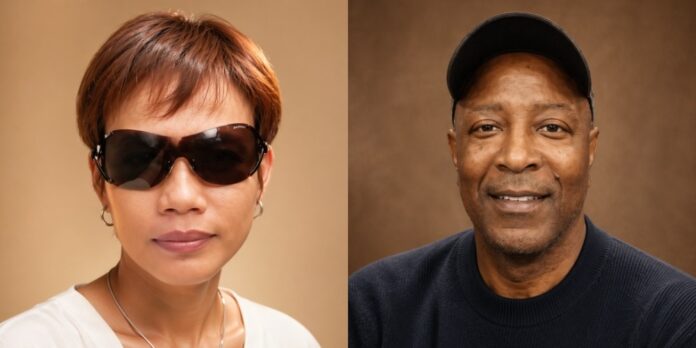
He is in Texas. She is in Bohol. The clock keeps moving. And the dream of building the Philippines’ first elite baseball development compound refuses to wait for anyone.
The morning Lerma Moore needs to reach her husband, it is already tomorrow where she lives. She sits somewhere in Cambanac, Bohol — a barangay of red dirt paths and coconut canopies on one of the Philippines’ most beautiful islands — and she waits for his part of the world to catch up. Thirteen hours. That is the gap. Thirteen hours between the woman holding the ground and the man drawing the plans.
Coach Merv Moore, 59, has spent the better part of his adult life building things in places where building was hard. Baseball programs in Switzerland. Seventeen “lonely” months in Bhutan. Clinics in Nepal. A national fastpitch team in Brunei. A missed opportunity in China. A media company in Texas. Now he is attempting something that might be his most audacious project yet: a full-scale baseball and softball development compound on a Philippine island — founded, managed, and built largely from a desk eight thousand miles away.
The Coconuts Performance Center, home of the Bohol Coconuts Baseball and Softball Club, is not yet standing. But it is alive in every sense that matters — in spreadsheets, in architectural renderings, in a Founders Club that has already begun attracting believers, and in the daily, grinding, unglamorous work of a couple trying to will something into existence from opposite ends of the planet.
“If you want to build something elite, you do not wait for ideal conditions. You create them.”
— Coach Merv Moore, Bohol Coconuts
The Weight of the Distance
Ask Lerma Moore what it is really like to run a startup from Bohol while her husband is still in Texas, and she does not reach for inspiration. She reaches for honesty.
“People see the website. They see the vision. They do not see me at seven in the morning trying to coordinate with the barangay council, then waiting until late at night to talk to Merv because that is the only time that works for both of us. This is not glamorous. This is work.”
The hours she describes are not theoretical. When it is 9 a.m. in Bohol, it is 8 p.m. the previous evening in Dallas. The windows for communication are narrow — and within those windows, they must compress decisions that any normal startup would spread across a week of hallway conversations into a single call. Permitting questions. Contractor timelines. Founder inquiries. Membership structures. Community relationships in Cambanac that require her physical presence and then her husband’s virtual sign-off.
“There are days it is incredibly hard,” she says, choosing her words carefully. “But I know what we are building. I know what this will mean for the young people here. So I show up.”
“I know what we are building. I know what this will mean for the young people here. So I show up.”
— GM Lerma Moore, Bohol CoconutsThe Architect, Grounded in Texas
Coach Merv’s story is the kind that sounds better with age. A Texas baseball kid who found his way to European dugouts, then to the Himalayas, then to Southeast Asia. A man who published newspapers and launched sports media platforms before most people knew what that meant. A coach with championship pedigree in Switzerland’s National League A and field experience in countries — Bhutan, Nepal, Brunei — where baseball barely had a foothold.
None of that prepared him, exactly, for the particular loneliness of building something from a distance.
“I’m on the phone with Lerma, I’m on video calls with architects, I’m writing the column, I’m working on the Founders Club materials — and then I look up and it’s midnight in Bohol,” he says, laughing softly. “She’s already been awake for fourteen hours dealing with the real stuff. And I haven’t slept either.”
The Founders Club is an exclusive collective of early believers whose investment enables the construction of the Coconuts Performance Center — an elite baseball academy, eco-lodge suites, and community kitchen on Bohol Island. Founders receive lifetime perks, equity-adjacent positioning, and the rare distinction of having been part of a movement before it was a movement. Four spots remain.
The target date has been circled in red for months: May 22. That is when Coach Merv hopes to board a flight and finally stand on the land he has been designing from a continent away. To walk the property in Cambanac with Lerma. To shake hands with local officials and contractors. To feel Bohol beneath his feet instead of on a screen.
“May 22 is not just a date for me,” he says. “It is the moment the vision stops being something I talk about and becomes something I can touch.”
But May 22 is contingent. And Coach Merv is not shy about saying so.
The Last Four
The Founders Club has spots — and four of them remain unfilled. That is the number standing between Coach Merv and his flight to Bohol. Between a transatlantic dream and a return.
“I need four more Founders,” he says plainly. “Not because of a magic number — but because those four represent the financial foundation that allows me to make this trip sustainable. That allows me to go and stay and build. If I go to Bohol without the pieces in place, I’m not going to build anything. I’m going to be scrambling. And Lerma deserves better than that. This project deserves better than that.”
The pressure in his voice is real but controlled — the voice of someone who has been in tight spots before and learned that panic is a luxury. This is the same man who arrived in Bhutan undecided about his future and left with a dream. Who rebuilt after setbacks that would have ended lesser projects.
But he is also aware that pressure has a human cost — and that cost, in this case, is often borne by his wife.
“Merv carries so much of the big vision. I carry so much of the daily reality. That is how we work. But I will tell you — when those four spots fill, everything changes. For both of us.”
— GM Lerma Moore, Bohol Coconuts
Lerma’s Bohol
What outsiders sometimes miss about this project is how deeply personal it is for Lerma Moore. Born and rooted in the Philippines, she studied tourism and hospitality in Manila, built a family, managed restaurants, navigated real estate, and eventually found her way to Cambanac — where she is now not just a businesswoman, but a Barangay Kagawad, a local elected official whose credibility runs as deep as the coconut trees on the property.
She is, as the club describes her, the local anchor. And anchors, by definition, are rarely celebrated for the invisible work they do.
“People do not always see the meetings I attend, the relationships I maintain, the trust I have built here over years,” she says. “But that trust is what makes this project possible. You cannot parachute into a Philippine barangay with big American baseball dreams and expect it to work. It works because I am from here. Because I am known here. Because people here believe in what we are doing.”
What they are doing, concretely: building an elite teenage baseball and softball development academy aimed at producing the first native-born Filipino Major League Baseball superstar. The compound will also feature eco-lodge suites, a community kitchen, and programming woven into the fabric of Cambanac itself. It is ambitious in the way that only projects born from genuine belief can afford to be.
“You cannot parachute into a Philippine barangay with big American baseball dreams and expect it to work. It works because I am from here.”
— GM Lerma Moore, Bohol CoconutsWhat a Day Actually Looks Like
In Bohol, Lerma’s morning might begin with a walk to the property — checking progress, noting what needs attention, fielding a question from a neighbor about what exactly is going up on that plot of land. By mid-morning, she is navigating the bureaucratic rhythms of local government, following up on permits, maintaining the relationships that took years to build and can evaporate quickly without tending.
In Texas, Coach Merv is likely still asleep. He will wake to messages she left, make calls of his own to Founders Club prospects — people across the United States, Canada, and beyond who have expressed interest in the project — and work through the media content, the columns, the planning documents that keep the digital presence of the Bohol Coconuts alive.
Then the window opens — usually in the evening, Dallas time — and the two of them sync. These calls are the operational heartbeat of the entire project. Decisions get made. Problems get surfaced and solved. And then the window closes again, and the next fourteen hours begin.
“We have gotten good at being efficient,” Coach Merv says with a dry laugh. “We do not waste time on the call. Every minute counts.”
The Mission Behind the Pressure
Strip away the logistics — the time zones, the funding gaps, the distance — and what remains is something harder to quantify but easier to feel. A man who has coached on three continents, who spent thirty years accumulating the specific expertise this project demands, and who has chosen to pour it all into a tropical island in the Philippines. A woman who could have opted for a quieter version of her life and instead chose to become the operational engine of something unprecedented in Bohol.
The mission, as stated on the Coconuts website, is to build the first native-born Filipino MLB superstar. That is the headline. But underneath it is a quieter ambition: to prove that world-class athlete development does not have to happen in the cities that always get the investment. That talent exists in places like Bohol, in kids who just need a field and a coach and a system built around their potential.
“I have coached baseball at tournaments in 14 countries,” Coach Merv says. “But Switzerland, Bhutan and Nepal taught me the most. And I will tell you — the hunger I saw in those places, the hunger I see in the kids here, it does not require a fancy address. It requires belief. And infrastructure. And someone willing to build it.”
“This is not a project we are building for ourselves. We are building it for those kids. That is what I tell myself when the pressure gets heavy.”
— Coach Merv Moore, Bohol Coconuts
May 22: A Date That Means Everything
Four founders. One flight. One reunion on a piece of land that exists, right now, mostly as a dream rendered in blueprint form on a screen in Texas.
Lerma is asked what she will feel when her husband finally lands in Bohol, steps off the plane, and drives to Cambanac for the first time as the operational launch of this project begins in earnest.
She is quiet for a moment.
“Relief,” she says finally. “And then we get to work.”
That is the Bohol Coconuts in a sentence. No fanfare. No illusions. Just two people — separated by an ocean and thirteen hours — building something that does not exist yet, because they believe it should.
“I have seen places where the kids are not the main focus, and that’s the opposite of the Coconuts. Everything we do will be to uplift these kids and provide them pathways in baseball, softball, academics, and job training,” smiled the former Swiss national team skipper.
“It’s no accident that Lerma is the face of the club,” added a man who prefers to work behind the scenes. “My job is to promote these kids, not myself, and that excites me. I win when these kids win in life.”
Four spots remain. May 22 is circled. And somewhere in Cambanac, Lerma Moore is already up.
Four Founding Spots Remain
Help Coach Merv make it back to Bohol on May 22. Join the exclusive collective building the future of Filipino baseball.
Explore the Founders Club →