


I went to Bhutan to build a baseball program. I didn’t expect Bhutan to rebuild me.
I put a lot of pressure on myself to win. That’s not an apology. That’s just who I am.
I never wanted to be just a coach. I wanted to be a championship coach — the kind who competed for titles every single year and expected to win them. That drive took me from a newspaper office in Texas all the way to Switzerland, and eventually to a tiny kingdom in the Himalayas that most people can’t find on a map.
Bhutan wasn’t on my radar. But when BBSA president Karma Dorji accompanied his wife and daughter to Australia — his daughter was studying there — the organization needed leadership. I said yes. Seventeen months later, I left a different man.
“I felt like a fat kid on a diet living in a bakery full of chocolate cake. I wanted to coach so badly — but if I wanted to leave Bhutan stronger than I found it, teaching coaches had to come first.”
To understand Bhutan, you have to understand a twelve-year-old kid named Larry Gallegos.
I was working 16-hour days at my newspaper and getting four hours of sleep a night. My paper sponsored a little league team — honestly, just so I could escape the office and breathe. Larry had never played baseball. He couldn’t make contact with the ball. I doubt he hit a single foul ball in the first two weeks of practice.
But I noticed something. No matter how many times he missed, his head never went down. The more he failed, the more determined he became.
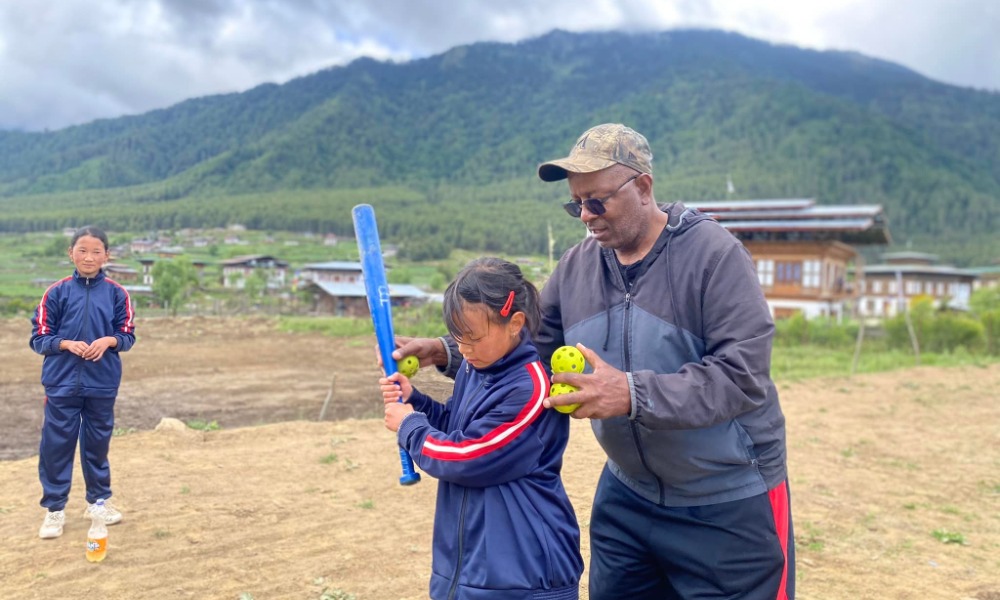
I shocked my assistant coaches and made Larry my leadoff hitter for our season opener. He struck out his first two at-bats. My coaches were looking at me like I’d lost my mind. Then Larry drilled a single up the middle and stood on first base with his hands on his hips, staring at his dad in the bleachers.
“I felt tears coming from my eyes. I did not have any kids of my own, but I felt like a proud father. It was a satisfaction more powerful than being a small business owner. That’s when I knew I wanted to coach.”
When I graduated high school in 1984, there were no African American Division I college baseball coaches and just one Latino head coach. I am the type of person who dreads doing the same thing every day unless I have a passion for it. I was never interested in being a high school coach. So I turned to sports writing instead — and I was good at it. But the diamond kept calling.
I was 25 years-old when I sold my newspaper business and traveled across the ocean to pursue coaching. Europe was first.
I fell in love with the European club model — starting in March, ending in September. Seven months of baseball. That part was great.
But twice-a-week practices? That was demoralizing. I coached four or five guys in Switzerland who had the talent to play in the U.S. if they’d had more training opportunities. I was proud of what I accomplished there. But it always felt incomplete. Because it was part-time.
And then there was the noise. The politics away from the diamond. It drained me in ways the game itself never did. I stopped having fun.

A group of Swiss teenagers reminded me of something I’d almost forgotten. When I see a kid for the first time, my mind instantly starts thinking about what that kid can become. That’s the fun part. Not just teaching fundamentals — but building mental toughness.
We are all products of our environment. The field is my classroom and it is always a positive place. But I am going to challenge my kids to be the best versions of themselves. Sports is more fun when you have success, and the only way to have success is to work harder than the other kids.
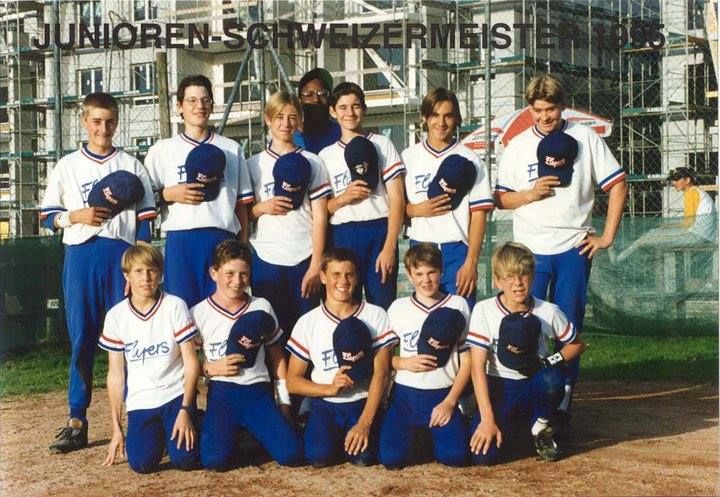
Those Swiss teenagers—Allain, Seppi, Tommy, Raffy, Chris—reminded me that I actually enjoyed coaching kids even more than coaching adults. I just needed the right place to prove it.
Bhutan was an organization in its infancy. Cricket players who had never held a baseball bat. Kids who had never developed a single bad habit. For a coach who had spent years trying to break ingrained mechanics in experienced players, that clean slate was intoxicating.
But I had to make a decision early. I have a big personality on the baseball field. I did not want to overshadow my young, Bhutanese coach trainees. So I stepped back. I promoted my coaches to the kids. I wanted the players to understand that the American was not the chief — that their Bhutanese coaches were in charge. That was in the best interest of the future of baseball and softball in Bhutan.
It was the hardest thing I’ve done as a coach. The fat kid in the bakery, staring at the chocolate cake.
But I loved the coaching classes we held in the office. My coaches had to stand in front of their peers and teach — hitting, fielding, throwing, pitching, baserunning. I did not want to just teach them the rules. I wanted to teach them how to be effective, confident coaches who trusted their own knowledge of the game.

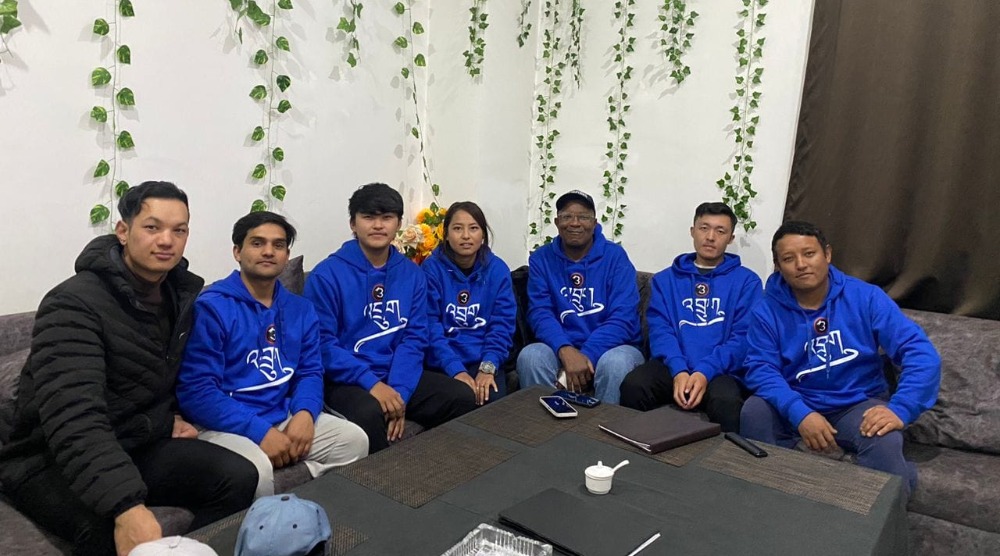
My staff became family. Sanjeevan was a workaholic who reminded me of myself at his age — I had to remind him more than once that being in the same house as your wife is not the same as spending quality time with her. His wife Tshering became like a daughter to me. She was strong-willed, fiery, brutally honest with her players. She always made me laugh — and that is not easy to do. She was so genuine and authentic. I love that in people.
Jiggy — Jigdrel — was an introvert like me. Natural connection. He has a silent confidence I loved. But I had to teach him that some situations require you to turn up the volume. He had all the tools to become an outstanding leader.
And Choki. Perhaps my best coach trainee. He had a charisma and personality that would have made him an exceptional coach. When he migrated to Australia to study, I was more than a little sad. That’s an understatement.
People are surprised when I say the toughest part of Bhutan was the loneliness. I’m an introvert. I crave privacy. I don’t need the spotlight. But seventeen months is a long time to be away from the person who is your rock.
Lerma wanted so badly to visit Bhutan. When her visa was denied, it was one of the worst days of my life. I was devastated. I knew she would be heartbroken — and that broke my heart.
I had hoped Bhutan would be my final stop as an international coach. I had envisioned going back and forth for the next 10 years, building something lasting. But life changes plans. God works in mysterious ways.

Bhutan was good to me in other ways, though. Ninety percent of my staff were vegetarians. My meat consumption dropped at least sixty percent. I discovered a love of spinach and cheese. I’ve always loved fried rice, and I ate a lot of it.
However, the seemingly endless number of outdoor stairways and hills of Bhutan eventually caught up with me — my Achilles tore during my third week in Nepal — but the kingdom itself quietly improved my health even while it tested my spirit.
The Bohol Coconuts idea came to me at 30,000 feet above the Pacific, flying home to Texas.
God put it in my head. Simple as that.
I could work with Lerma. I could build a full-time ecosystem for youth baseball — no more twice-a-week practices, no more part-time programs that always feel incomplete. And the talent in the Philippines is unlike anything I saw in Switzerland or Bhutan. If I could build the right ecosystem, I could finally test myself: could I develop MLB prospects?
Bhutan gave me back what Switzerland had slowly taken. Not ambition — that never left. Not the drive to win championships — that’s in my DNA. What Bhutan gave back was the pure joy of the development process. The first look at a raw kid and the instant question: what can this person become?

I also came back with something quieter. There is so much hate in the United States. It was genuinely refreshing to be around people with Christian values — real ones, not performed ones. Living alone in Bhutan for almost a year and a half gave me space to reflect, to grow spiritually, and to reconnect with God in a way I hadn’t in years.
“God led me to Bhutan to rediscover myself.”
I left Bhutan with a sore Achilles, a love of spinach and cheese, and something I hadn’t carried in a long time: peace.
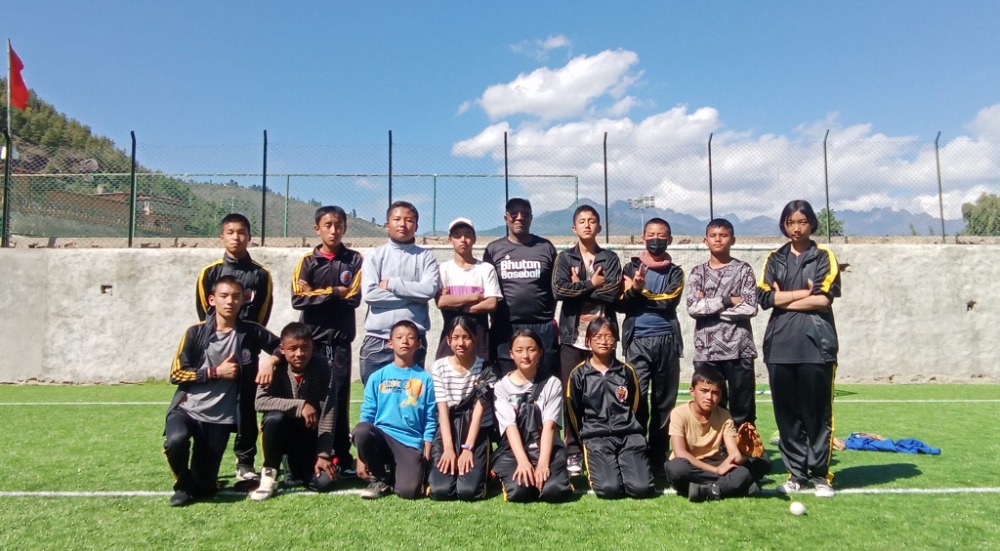
That’s not a bad return on seventeen months.