

Feature · Bohol Coconuts Baseball & Softball
A psychology major who built four Swiss national champions and stunned a European “B-Pool” powerhouse with a 14-year-old pitcher now has his sights set on the ultimate prize: the first native-born Filipino MLB superstar.
Before Merv Moore ever set foot on Bohol Island, he had already done something most baseball coaches never get to do once — let alone repeatedly. He had taken programs that had no business winning and made them win anyway. Not through luck. Not through superior resources. Through a deliberate, psychology-rooted approach to building athletes from the inside out.
That is the foundation on which the Bohol Coconuts Baseball and Softball Club is being built. And if Moore’s European track record is any guide, the people who doubt him right now will eventually stop doubting him — because the scoreboard will not give them a choice.
Moore is the co-founder and head coach of the Coconuts — an elite youth academy being established on Bohol Island, Philippines, with a mission that is equal parts audacious and precise: to develop the first native-born Filipino MLB superstar. The program will begin formal training in June, but the blueprint is already drawn. And the architect has built this kind of thing before.
A résumé built on rebuilds
Moore’s coaching career in Switzerland reads like a case study in organizational transformation. From 1993 to 1996, he served as head coach of the Therwil Flyers, winning three national championships in four seasons. Then, in 1997, he took the reins of the Zurich Challengers — a team that had finished fifth the previous season — and within two years had rebuilt them into Swiss champions.
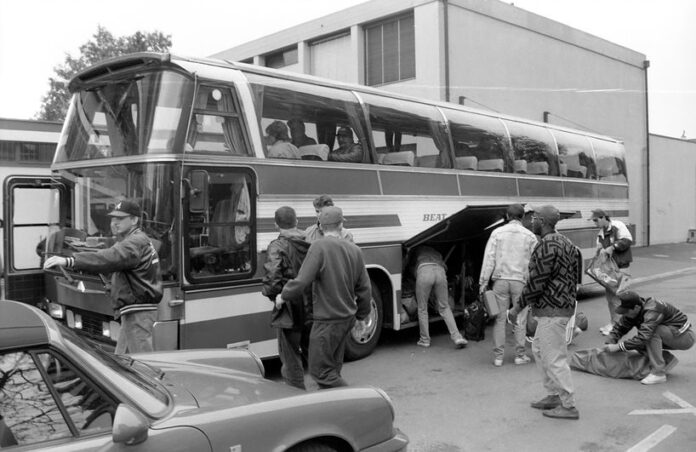
Coach Moore · Swiss coaching record
During his time leading the Challengers, Moore’s assistant coach was Makoto “Machi” Fukamachi — now a senior engineer at Nissan in Japan — whose love of the game and sharp baseball mind left a lasting impression. “Machi understood the game at a level most players never reach,” Moore recalls. “Having someone like that in the dugout makes you a better coach.”
The moment that defined his coaching identity
Of everything on Moore’s résumé, one result stands apart — not just for its improbability, but for what it revealed about his coaching philosophy.

While leading the Swiss National Team, Moore guided his squad to a historic 4–2 victory over Ukraine, the 1994 European Baseball Championship B-Pool champion. The win was remarkable on its own terms. What made it unforgettable was the pitcher Moore trusted to deliver it: a 14-year-old.
The decision was not reckless. It was the product of Moore’s deepest coaching conviction: that mental preparation and self-belief, properly developed, can outperform physical advantage. The young pitcher delivered. Switzerland won. And Moore’s reputation as a coach who develops athletes differently — from the mind outward — was cemented.
The psychology of winning
Moore majored in Psychology in college — a background that informs every element of how he builds athletes. His players are not just trained to execute; they are trained to think, manage pressure, and perform when the stakes are highest. In Moore’s framework, mental toughness is not a byproduct of winning. It is a prerequisite for it.
Reading the Philippine talent landscape
The Coconuts program has yet to hold its first practice. But Moore has not been idle. He has spent considerable time studying video footage of Philippine youth baseball and softball — including game film from recent Little League tournaments — carefully evaluating the level of play, the coaching, and above all, the raw talent available across the country.

What he saw impressed him on multiple fronts.
What stood out to you when you watched those games?
The coaching was better than I expected. These coaches clearly care about their athletes and are working hard to develop them. And the performances — the talent is genuine. Filipino kids can absolutely play this game at a high level. But I honestly believe that the kids in the provinces, boys and girls from low-income families, are more hungrier and more battle-tested than kids from affluent communities in Manila.
What did watching that footage confirm for you about the Coconuts’ timeline?
It confirmed that 2028 is realistic. When this program begins and our players have had time to develop within our system — the fundamentals, the mental framework, the competitive experience — I believe the Bohol Coconuts will be ready to compete with the top youth programs in this country by 2028. Not participate. Compete to win.
The psychology behind the blueprint
Moore’s academic background in psychology is not incidental to his coaching — it is the engine of it. His reputation across Swiss baseball was built not just on wins, but on producing athletes who were fundamentally sound and unusually composed under pressure. Players developed in his system were, by design, built to perform on the international stage.

His approach begins with a premise that runs counter to how most youth sports programs operate: the mental architecture of an athlete must be constructed as deliberately as any physical skill — and it must start early.
Why does the psychology piece matter so much at the youth level?
Because the window to shape how an athlete thinks about failure, pressure, and competition is when they’re young. By the time most programs try to address the mental side, the habits are already set. We are going to build the mental foundation first — identity, confidence, resilience, focus — and layer the physical skills on top of it. That is what produces a player who can still execute when the game is on the line at an international showcase.
How does that shape who you’re recruiting?
We want to get the right players at six and seven years old. That is not a typo. At that age, you are not yet fighting bad habits. You are building the whole athlete from the ground up — movement patterns, baseball IQ, and the psychological framework that will carry them through the hard years. The players we develop through this system will be ready to sign international deals at sixteen to eighteen. That is the pipeline we are constructing.
Building from the inside out
In Moore’s model, the mental game is not a supplement to physical training — it is the foundation. Confidence is coached. Pressure is practiced. The goal is an athlete who arrives at the international level already knowing how to perform under it — because they have been trained that way since childhood.
What it actually takes

Walk us through the realistic path from Bohol to the MLB.
You identify the right kids young — six, seven years old — and you build them correctly from day one. Fundamentally sound mechanics that hold up under fatigue. Baseball IQ that develops over years of repetition. And a mental framework that treats failure as information instead of identity. By the time our top prospects are sixteen to eighteen, they should be ready for international showcases and on the radar of professional organizations. That is the window, and we are designing the entire program to hit it.
What does “fundamentally sound” mean to you?
It means your mechanics are repeatable. Under pressure, under fatigue, in a strange stadium in a foreign country with scouts in the stands — your body does what it has been trained to do, to trust the fundamentals, because your mind is not fighting it. Fundamentals and psychology are not separate things in my program. They reinforce each other constantly.
The softball dimension

From the beginning, Moore has structured the Coconuts to include a fully resourced softball program — not as an afterthought, but as a co-equal pillar of the organization’s identity. His review of Philippine youth softball footage revealed the same thing he saw on the baseball side: genuine talent and committed coaching that, with the right developmental system, could produce elite-level athletes.
Why was it important to build softball into the Coconuts from day one?
Because the same philosophy applies. The same psychology. The same commitment to building fundamentally sound, mentally tough athletes who are ready to perform internationally. Half the athletic talent in the Philippines is female. If you’re serious about building a program and a culture, you build it for all of them.
Building something that lasts
The Coconuts Performance Center — the physical home of the program — is being developed to match the scale of Moore’s vision. Training infrastructure, academic support, the Eco-Lodge Suites for visiting coaches and supporters, and a community kitchen that extends the program’s reach into the broader Bohol community. Every element has been designed with the long game in mind.
Moore is asked, at the end of a long conversation, what he says to skeptics — people who hear “first Filipino MLB superstar from Bohol Island” and cannot quite get there yet.
I tell them the same thing I would have told anyone who doubted the Swiss program. I tell them to watch. I have built programs from nothing before. I know what it takes. I know the psychology of it — the belief you have to manufacture before the results give you any reason to believe. We are doing that work right now. The results will come. They always do when the foundation is right.