
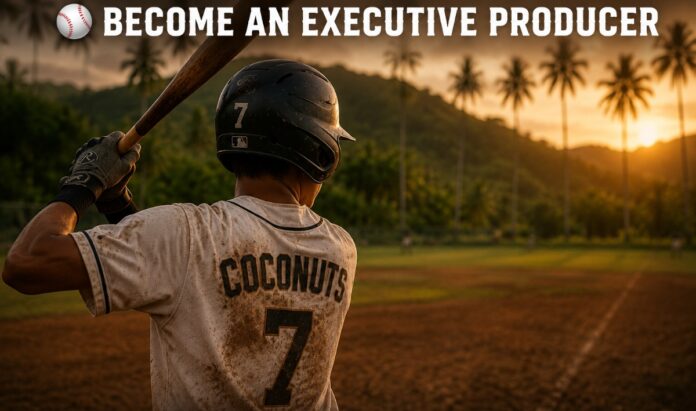

There is no field. Not yet.
The dugouts are still a blueprint, the inaugural season a date on a calendar that hasn’t yet turned a page. Most sports documentaries arrive as elegies for a completed season or hagiographies of a championship run, with the outcome safely in the rearview mirror.
Building the Coconuts is not that documentary.
It’s an origin story being filmed in real-time, a raw, unpolished chronicle of belief set in Barangay Cambanac, Bohol, where a small group has decided the island deserves a legitimate baseball and softball identity.
The cameras are already to roll, capturing every setback and milestone. But before the series premieres on June 23, the producers face their own opening challenge: finding a handful of sponsors who understand that the most valuable real estate in any story is the very beginning.
This is not a typical advertising pitch. It’s an invitation to become a permanent character in a narrative that a community will watch for years.
“This is not a club that started with a field and a budget,” said Lerma Moore, General Manager of the Bohol Coconuts Baseball and Softball Club.

“We started with a belief that Bohol could produce players, develop athletes, and build something people would be proud of. We wanted the people who believed in us earliest to be the ones who are remembered. That is why the Producer credits are permanent. You cannot buy your way in after the season begins and receive the same recognition.”
The docuseries, produced by fourth-year college student and entrepreneur Hali Moore, has carved out an exclusive tier of sponsorship that feels more akin to early-stage investing in a vision than a media buy. For the entire inaugural season, only two Executive Producer spots exist, available for a season-long investment of $1,000.
Below that, four Associate Producer spots at $250 provide another entry point. The window is narrow, and the incentives are designed for legacy, not just visibility.
An Executive Producer doesn’t just get a logo on a screen. They receive a dedicated, full-screen title card at the opening of every episode. Their name is placed prominently in every YouTube video description. They get a custom-framed Bohol Coconuts jersey, a physical artifact of the club’s founding year. It’s a permanent, on-screen record that says: I was here before the first pitch was even thrown.
The Associate Producer package ties a sponsor’s name to the rolling end-credits of each episode, along with an official club t-shirt and a personalized video shoutout from the team itself. There are no episode-by-episode options.
The credit, the visibility, and the legacy are non-negotiable, all-or-nothing commitments to Season 1. The production has intentionally designed this to reward faith in the project’s earliest, most fragile moments.
The mission, however, goes deeper than branded content. The club operates with a dual mandate.
While Producer-tier funds contribute to the operational backbone of the production itself, the series also funnels 100% of proceeds from a separate Apparel Sponsor tier directly into the club’s Community Soup Kitchen program. For a potential sponsor, this isn’t a transaction for passive impression counts; it’s a direct contribution to a club still clawing its way into existence, in a community watching closely.

The target for these spots is thoughtfully narrow: expatriates with Boholano ties seeking a visible path to support the island, small and mid-size businesses craving authentic integration beyond banner ads, and individuals who simply believe in the mission and want their name on something real. The series will be distributed on YouTube to an expected audience across the Philippines, the United States, and the broader Filipino diaspora.
The appeal is less about guaranteed views and more about narrative scarcity. Season 1 is the only season where founding credits will ever exist. Once these six spots are filled, the chance to be stitched into the origin story of the Bohol Coconuts vanishes.
“People remember brands differently when they are tied to a story,” Moore said. “We are giving sponsors the chance to be part of something that Bohol will talk about for years.”
In modern sports, sponsors plaster their names on everything from stadium roofs to practice jerseys, often becoming white noise in the background of a completed product. Building the Coconuts is flipping that model.
The reality show is asking a simple, profound question: What is the value of your name being etched not on the finished cathedral, but on the cornerstone everyone forgot was laid before the walls went up? For two executive producers, the answer will be recorded forever.